
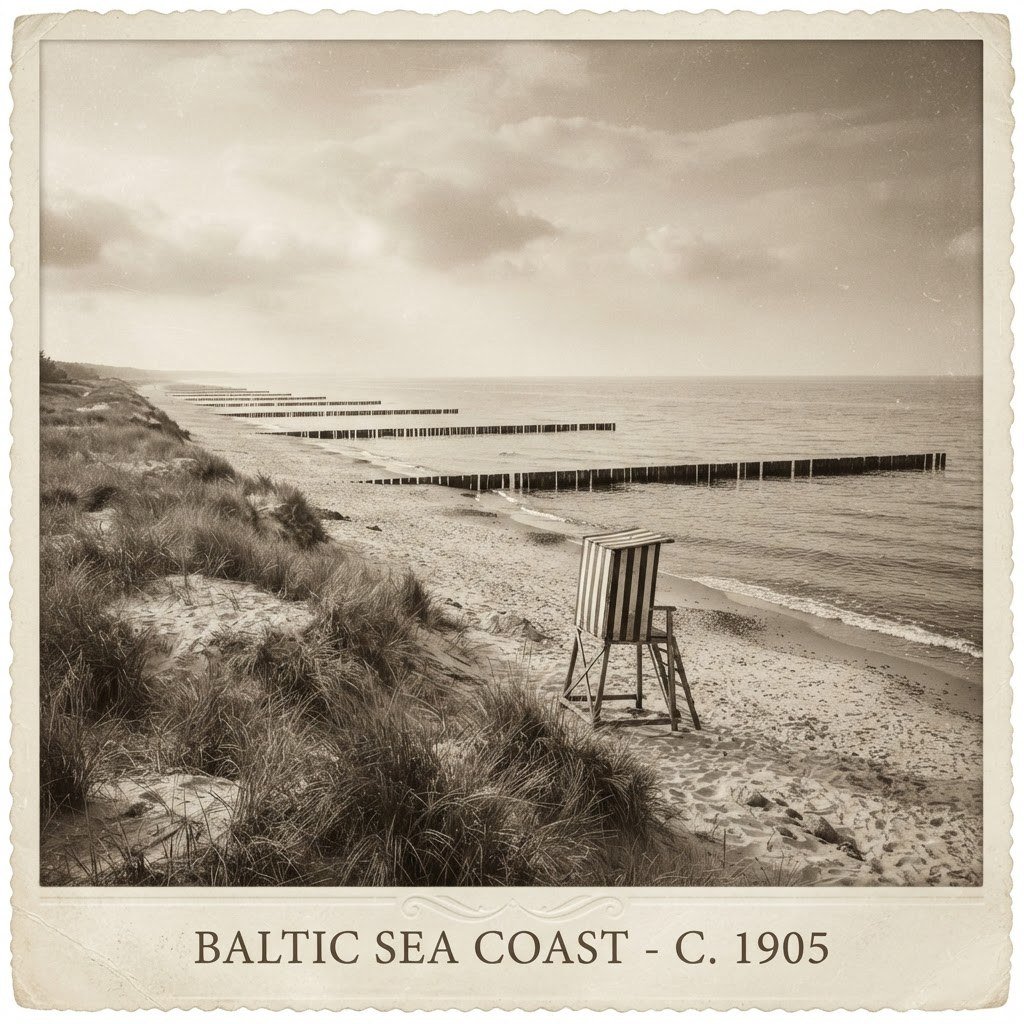
Germany is not a naturist destination. It is the naturist destination – the country that invented the thing. Organized naturism began here in 1898, when the world’s first Freikörperkultur association was founded in Essen, and a century and a quarter later the practice remains woven into ordinary German life: nude-standard saunas in every city, textile-free pool evenings, official urban park zones, and a Baltic coastline where unclad bathing predates the Federal Republic. This is the master guide to FKK – the history, the law, the etiquette, and where the series’ regional deep-dives fit.
The History: From Lebensreform to the Reunified Republic
The FKK movement grew out of the Lebensreform era’s reaction against industrialization. In 1903 Paul Zimmermann founded the Freilichtpark Klingberg on the Baltic, which by 1926 had grown into a 100,000-square-meter naturist settlement; Richard Ungewitter’s manifestos beginning with Die Nacktheit (1906) and Karl Vanselow’s magazine Die Schönheit supplied the ideology – sun, air, exercise, health. The Weimar Republic hosted the boom: over 100,000 organized members by 1933. The Nazi regime banned the associations that March as “degenerate,” quietly eased enforcement around the 1936 Berlin Olympics, and by a 1942 directive permitted enclosed private FKK grounds. The two post-war states diverged fascinatingly: the West kept its fenced, club-centric Verein structure under the DFK (founded 1949, now roughly 130-150 clubs with 32,000-35,000 members, the INF’s largest body), while the East, after the SED’s early bans collapsed under mass public defiance, legalized FKK beaches outright in 1956. East Germans built one of history’s great nude beach cultures precisely because the unclothed body was the one place the surveillance state could not follow – on an FKK beach, no one wore a party badge. Reunification merged the two traditions: the West’s organization and the East’s spontaneous public beach culture, both thriving today.
The Law: Nudity Is Not a Crime
The 1969 criminal law reform decriminalized simple public nudity in Germany, and the framework has not changed: §183 of the Criminal Code covers only exhibitionism with sexual intent, §183a only public sexual acts, and the administrative nuisance provision §118 OWiG is almost never applied to quiet sunbathing or swimming. A 1978 Federal Fiscal Court ruling explicitly recognized Freikörperkultur as a socially valuable, legally protected way of life. What regulation exists is municipal and specific – most famously Munich’s 1982 ordinance (revised 2014), which requires swimwear within the city limits except in six designated urban zones. In a German sauna, the law inverts entirely: swimsuits are banned for hygiene, and operators’ house rules – enforceable against fully dressed patrons – require you to undress.
The Etiquette
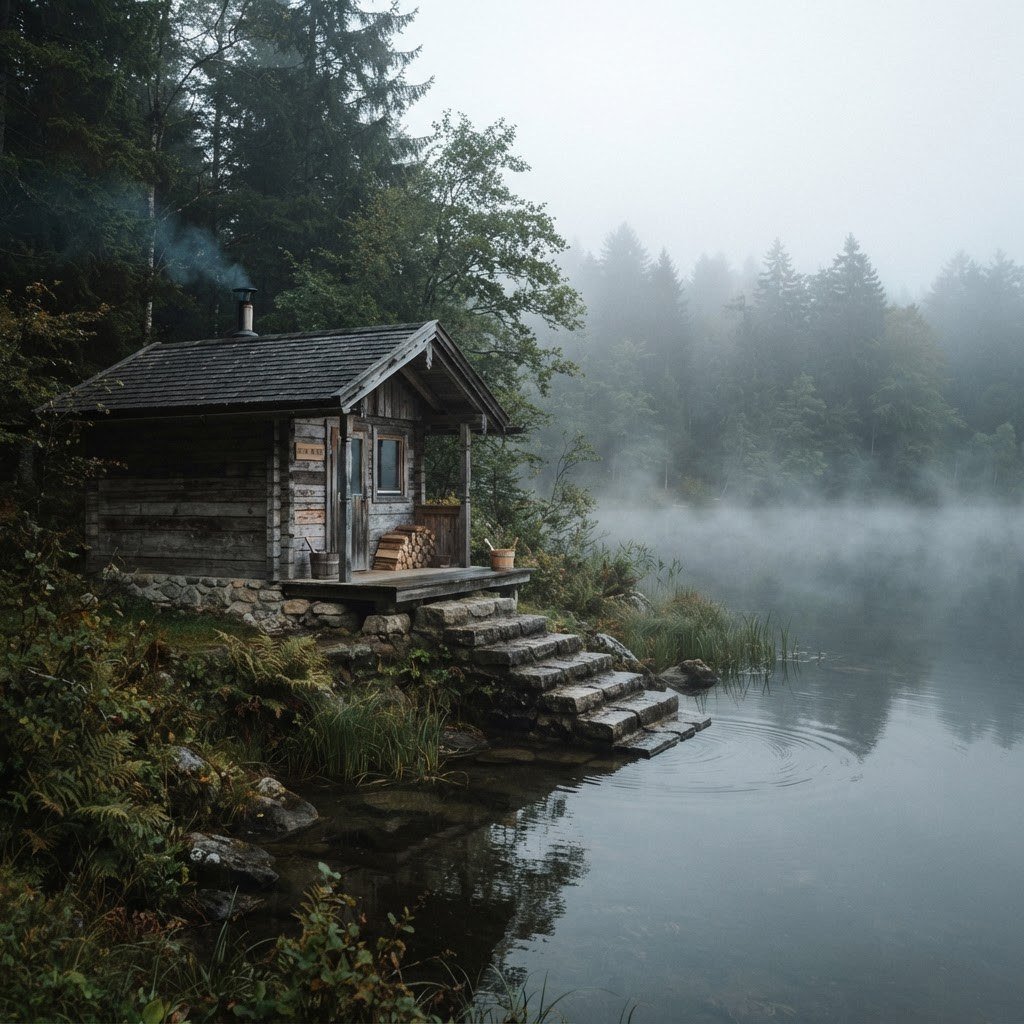
FKK culture runs on three commandments. The towel rule: no bare skin ever touches wooden sauna benches. The boundary rule: every thermal complex strictly demarcates its textile waterpark from its textilfrei sauna world – respect the line in both directions. And the conduct rule: German nude spaces are strictly non-sexual and family-friendly; staring, photography, and any sexual behavior mean ejection and police. The one persistent myth worth killing: FKK beaches and saunas are not swinger venues – a confusion largely traceable to the cruising woods behind certain Berlin lakes, which are distinct from the wholesome public lawns.
The Series
This guide anchors a five-part series: the Baltic and North Sea coast (Sylt, Rügen, Usedom, Darß-Zingst), Berlin and Brandenburg (forest lakes and urban saunas), Munich and Bavaria (the Englischer Garten and alpine lakes), the German sauna guide, and the country’s official nude hiking trails. Combined with our guide to textile-free pool sessions, they cover the most complete naturist infrastructure of any nation on Earth.
Where to Stay
Disclosure: this map contains affiliate booking links. If you book through it, we may earn a commission at no extra cost to you.
Leave a Reply