
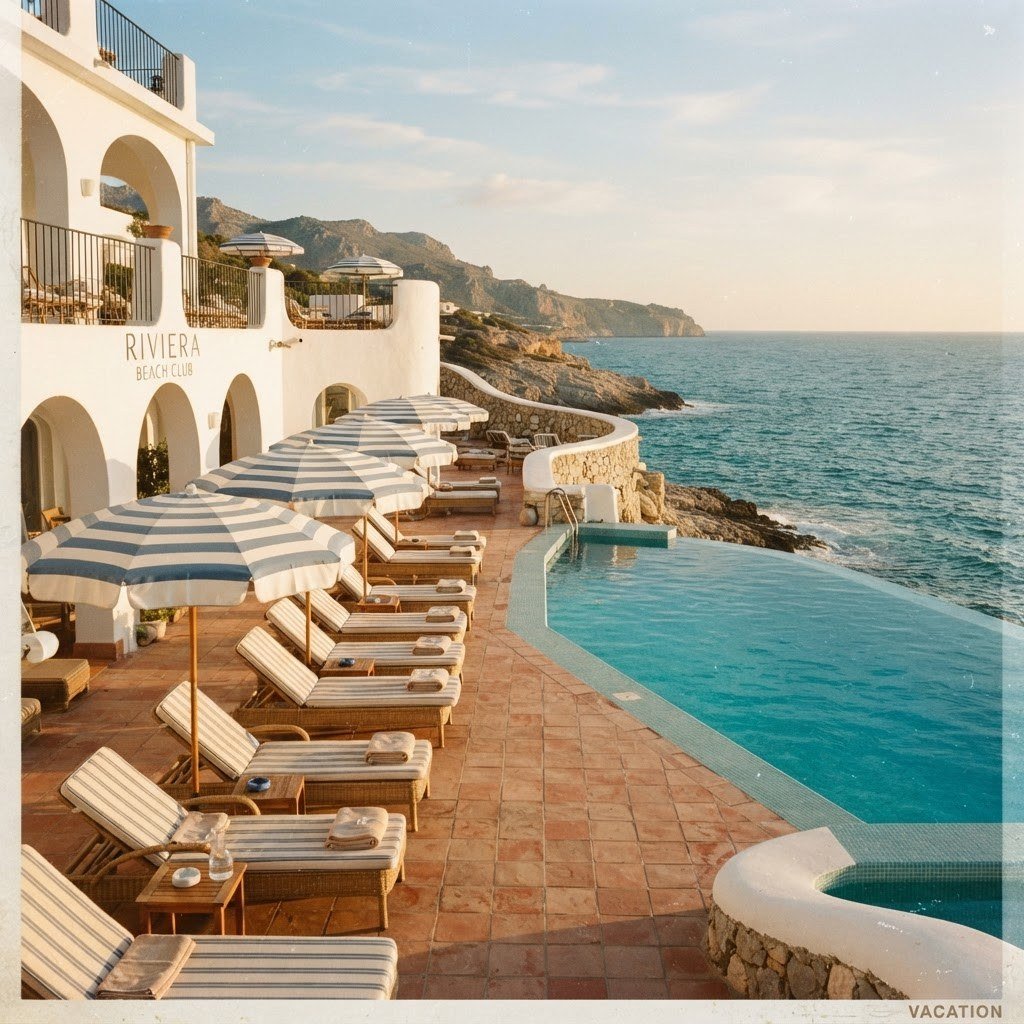
The honest verdicts first: Lebanon has no nude beaches, no naturist clubs and no INF affiliation – the bikini is the absolute ceiling of its beach culture, protected by a penal code that treats public nudity as an offense against public decency. Iran is a Level-5 zero, enforced with flogging statutes and a 2024 morality law, and no traveler should test it. But your instinct about the history is exactly right, and it is what makes these two countries worth a guide of their own. Within living memory, both coastlines belonged to some of the most liberal beach cultures on Earth – Beirut’s Saint-Georges jet set, Kish Island’s Concorde-and-casino resort – and both were reversed, in one case by civil war and rising political Islam, in the other by one of the fastest bodily-autonomy reversals any state has ever imposed. This is the story of the lost liberal coast.
Lebanon Today: The Bikini Ceiling
Public nudity in Lebanon is criminalized under Article 531 of the Penal Code of 1943 – the outrage à la pudeur publique – with one month to one year of imprisonment, reinforced by Articles 532 and 533. In practice the country’s beachwear geography is religious and communal: the Christian-majority and secular coast from Batroun through Jbeil, Kesrouan and Metn runs European-style beach clubs where bikinis are universal, while the public beaches of Saida, Tripoli and parts of the South enforce conservative standards – in May 2023, a woman in a one-piece swimsuit was harassed off Sidon’s public beach by a group demanding she leave, the feminist counter-protest was met with banners declaring the city conservative, and the municipality responded by posting official “modest attire” signs on state-owned sand. The gray zones are strictly private: high-walled pool villas in Batroun and Mount Lebanon, and chartered yachts – the viral skinny-dipping videos that periodically scandalize Lebanese social media, when identities surface, end in Internal Security Forces summonses under Article 531. There is no naturist association; Lebanese naturists practice in exile, from Cap d’Agde to Mykonos, and the Quebec diaspora keeps the Canadian club circuit familiar.
Beirut’s Golden Age, 1950-1974
Before the war, Beirut was the Paris of the Middle East and, on summer weekends, its Saint-Tropez. The Saint-Georges Hotel’s pool deck and marina hosted Brigitte Bardot, Elizabeth Taylor and Marlon Brando; the Riviera beach club (1956) ran salt-water pools and fashion shows covered by Paris Match; Long Beach and the Sporting Club held the Manara cliffside; Jounieh Bay filled with private chalets and yacht clubs. The bikini, born in Paris in 1946, was adopted by Lebanese high society within a decade. The honest historical verdict – and the myth worth correcting – is that even in that era, topless sunbathing was never tolerated on shared beach club decks; the liberal culture had a ceiling too, and it was the bikini. Toplessness lived instead on private yachts in Jounieh Bay, at secluded cliffside chalets, and, most famously, on stage: the Casino du Liban, opened in 1959 to rival Monte Carlo, staged Lido de Paris and Bluebell Girls cabaret revues – a daytime-nighttime split that defined the era’s libertinism.
The Reversal
The civil war of 1975-1990 destroyed the unified coastal culture – the Green Line cut Beirut in half, southern beach clubs were militarized, and Christian militias and affiliated businessmen seized coastal land for walled resorts. The lasting structural wound is legal: under the 1925 Maritime Public Domain decree Lebanon’s shore belongs to everyone, yet more than eighty percent of the coastline has since been privatized. Post-war politics layered religious conservatism over the geography – Hezbollah and Amal in the South, conservative Sunni movements in Sidon and Tripoli – and the 2019 economic collapse pushed ordinary families onto the few remaining free beaches, where cultural standards now collide daily. Beachwear has become a frontline of Lebanese identity politics, in both directions: the same liberal resorts of Kesrouan and Batroun that enforce the bikini ceiling have also been scandalized for turning away women in burkinis.
Iran Today: The Enforced Zero
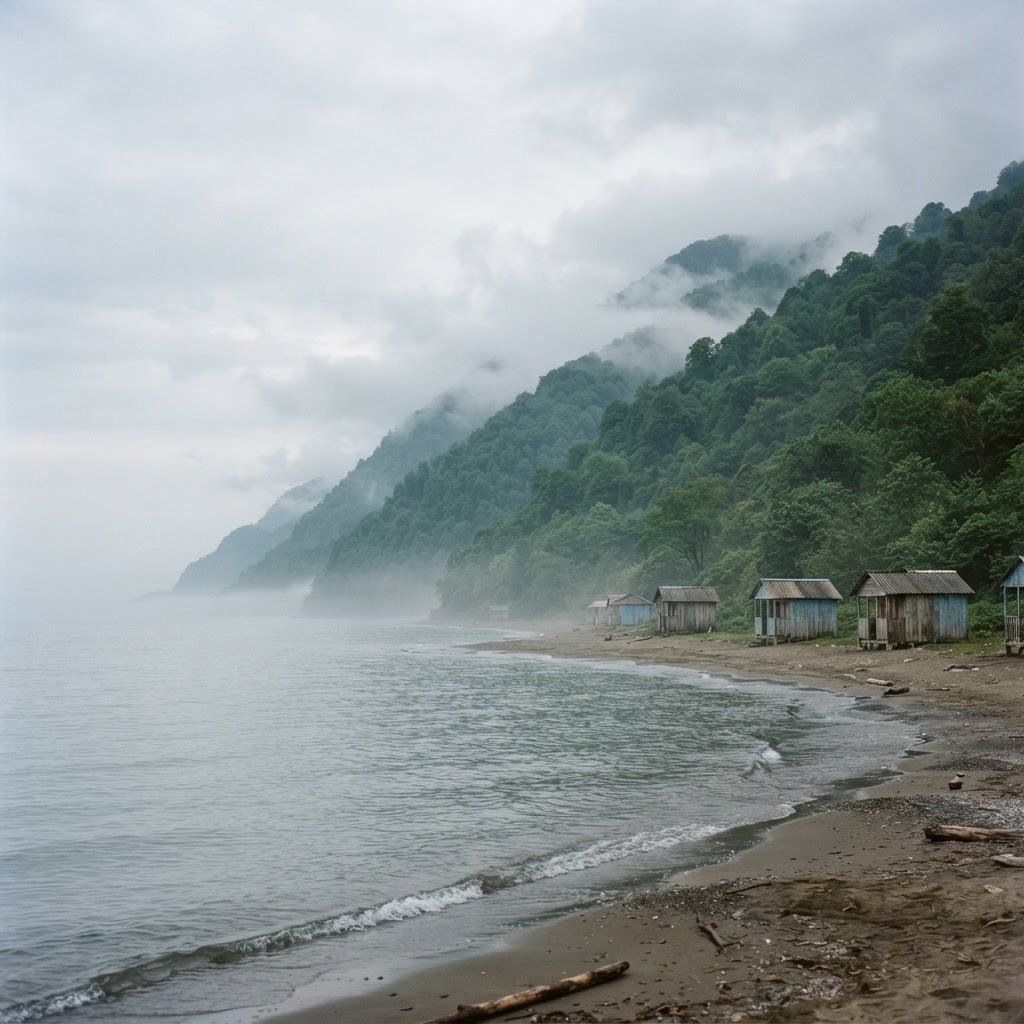
Iran’s prohibitions are the sharpest on the planet. The Islamic Penal Code’s Article 638 prescribes up to 74 lashes for public acts violating religious taboos; the 2024 Chastity and Hijab Law extended exposure and its online documentation to five to fifteen years’ imprisonment with fines of $12,000 to $22,000 and travel bans; the morality police patrol coasts with speedboats and drones, and foreign backpackers caught in ordinary swimwear on Hormuz and Qeshm have been detained, fined and deported. Even Iran’s baths are not naturist spaces: traditional hammams prohibit nudity outright, requiring men to wear a lungi wrap and women full body wraps – a correction worth making for spa travelers who assume otherwise. The system’s one genuine paradox is the women-only beach. Kish Island’s Plage Banovan is a twenty-thousand-square-meter fortress enclosure: perimeter walls, canopy screening extending into the shallows, a no-fly zone over the beach, a maritime exclusion zone for male boaters, and mandatory confiscation of every camera and phone at the door. Inside, Iranian women wear ordinary – sometimes very small – swimsuits, play volleyball and sunbathe; lifeguards patrol to pull straps back up when the boundary is tested, and the boundary is always tested. The Caspian coast’s version is sadder: the Tarh-e Darya – canvas and tarpaulin cages staked into the surf at Babolsar, Chalous and Ramsar, often rusted and dilapidated, inside which women swim in swimsuits behind sheeting while the same sea rolls outside.
Pahlavi Iran: Riviera of the Middle East
The before-era is one of the best-photographed reversals in modern history, archived in Magnum’s collections and the pages of Zan-e Rooz. Under the Shah, the Caspian coast – Ramsar, Babolsar, Namak Abroud, reached by the Chalous Road from Tehran – functioned as the French Riviera of the Middle East: unsegregated public beaches where women sunbathed in bikinis beside men, luxury hotels like the Grand Hotel Ramsar, and Tehran’s elite pool culture at the Imperial Country Club and the Hilton’s poolside parties. The flagship was Kish Island: from 1972, a development budget exceeding $100 million built a Grand Casino in red velvet, a runway engineered for Air France Concorde charters bringing European aristocrats directly to the Gulf, and completely unsegregated beaches where the jet set drank champagne in swimwear. And here the honest verdict matters as much as it does for Beirut: pre-revolutionary Iran never had a naturist movement, an FKK club, or a nude beach. Public nudity was a taboo that cut across secular and religious society alike. The exceptions were enclave-level – the Anglo-Iranian Oil Company’s walled compounds in Abadan and Ahvaz, where expatriate families ran British social norms around their private pools; wealthy families’ coastal villas in Mazandaran; private boats in empty Gulf coves. What Iran lost in 1979 was not naturism. It was bodily autonomy across the board.
The Reversal Timeline
Within four years, all of it was legislated away. On March 7, 1979, weeks after returning from exile, Khomeini decreed Islamic dress in government workplaces – and the next day, International Women’s Day, more than a hundred thousand women marched in Tehran under the banner “we didn’t make a revolution to go backwards.” The protests were suppressed; the July 1980 pak-sazi purges imposed dress codes across public institutions; by 1981-83 the coastal resorts had been seized or restructured – Kish’s casino became a hotel, the Concorde charters ended, the Caspian tarpaulin cages went up – and in August 1983 mandatory hijab was codified into the Penal Code with the lash penalty that stands today.
Where Body Freedom Went
It did not disappear; it moved behind walls and across borders. The Shamal villa culture of Mazandaran and Gilan – twelve-foot walls around private pools where young Tehranis hold mixed-gender parties in bikinis, at permanent risk of raid – is the domestic remnant. The visible naturism is diaspora: Iranian communities in Southern California who frequent Black’s Beach (our nude surfing guide covers its break), FKK campers in France, Germany and Croatia, and Persian-language naturist advocacy online that explicitly ties body freedom to the Woman, Life, Freedom movement. Lebanon’s version of the same story is quieter: a bikini coast, private walls, and flights to Cap d’Agde.
The Traveler’s Verdict
Neither country belongs on a naturist itinerary, and Iran belongs on no itinerary that involves testing its laws – the same advisory framing we apply in our Russia guide. Lebanon rewards the traveler in every other way: swim at the liberal private clubs of Batroun and Kesrouan under the bikini ceiling, explore the coves, and understand that the white-pebble beaches of Kfaraabida and Anfeh are skinny-dip rumors rather than institutions. What both countries offer the naturist reader is perspective – a reminder, documented in Magnum photographs and 1976 Kish promotional films, that coastal bodily freedom is not a one-way ratchet of history. It can be lost in a single revolution, and recovering it can take generations.
Where to Stay
Disclosure: this map contains affiliate booking links. If you book through it, we may earn a commission at no extra cost to you.
Leave a Reply