
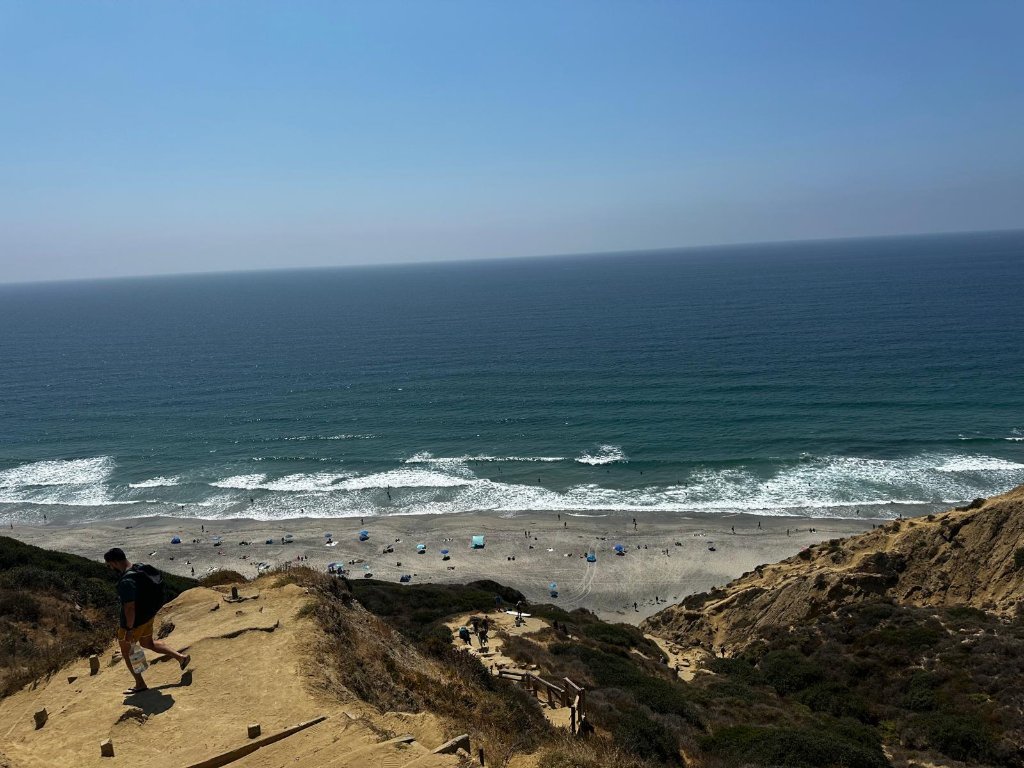
Walk onto the sand at Black’s Beach, wade into the Pacific until the water is up to your waist, then turn around. Three hundred feet of golden Torrey sandstone rise straight out of the beach, glowing in the afternoon light, with paragliders drifting along the cliff edge high above. It is one of the most beautiful sights in the United States, and almost nobody who has seen it forgets it.
Getting there takes effort. The trail down is steep and the climb back to your car is a real workout. But for anyone who is able, Black’s Beach is worth every step, and it is San Diego’s best-known clothing-optional beach.

The Honest Legal Picture
Before anything else, know this: Black’s Beach has two managers, and which side of the sand you’re standing on matters. The northern portion of the beach is owned and managed by California State Parks as part of Torrey Pines State Beach. The southern portion, officially Torrey Pines City Beach, is managed by the City of San Diego. Most guides skip this distinction, but it is the key to understanding the beach’s legal status.
The city side: San Diego’s City Council voted in 1974 to make Black’s what is believed to be the nation’s first municipally recognized clothing-optional beach. After a huge first-anniversary party and a backlash from bluff-top homeowners, a citywide advisory vote led the council to end the zone in 1977. That ban remains on the books today for the city-managed portion, and fines originally began at $15.
The state side: State parks operate under a different rule entirely. California’s park regulations prohibit nudity “except in authorized areas set aside for that purpose by the Department,” meaning state parks can authorize clothing-optional areas by designation. No such designation has ever been formally made at Torrey Pines, so even the state portion is not technically legal on paper. But this is where your experience on the beach matches the record: state park rangers have long exercised tolerant discretion on the northern stretch. KPBS, San Diego’s public radio station, put it plainly: it is not actually legal to be nude on the state-run portion of Black’s, “but you probably won’t get ticketed for it either.” Visitors routinely report rangers patrolling the sand without bothering anyone.
Even UC San Diego’s own safety page describes nudity here as “prohibited, but practiced,” and a 2026 Los Angeles Times report found nude beachgoers throughout the beach, with locals describing citations as very rare.
The practical takeaway: the clothing-optional crowd gathers on the northern stretch, starting about 100 yards south of the Gliderport trailhead and running roughly 1.1 miles north to the beached steel buoy south of Flatrock Point – mostly state park land. Go with the local norms, be respectful, and understand that you are relying on decades of ranger tolerance rather than a formal designation on either side. Tolerance is not legality, and enforcement policies can change, so check local news before you go.
Getting There by Car: Torrey Pines Gliderport
The most direct way to reach the beach is from the Torrey Pines Gliderport at 2800 Torrey Pines Scenic Drive. The Gliderport has an on-site, unpaved parking lot that visitors consistently report as free, and the Gliderport itself is open from 9 AM until sunset. Arrive early on sunny weekends, because the lot fills up.
Even if you never go down to the sand, the cliff-edge viewpoint alone is worth the stop. You can watch tandem paragliders and hang gliders launch off the bluff, and the on-site Cliffhanger Cafe has ocean views. Tandem paragliding flights are offered daily by the Gliderport, so you can see the beach from above too.
A paraglider rides the lift along the cliffs at the Gliderport, with Black’s Beach below.
Getting There by Public Transit
You do not need a car. Black’s Beach is reachable on San Diego’s transit system, though it takes a little planning.
- Take the Trolley to UTC. The UC San Diego Blue Line trolley runs north from downtown San Diego and Old Town to the UTC Transit Center, which opened as part of the Mid-Coast extension in November 2021.
- Transfer to NCTD BREEZE Route 101. At UTC Transit Center, board the 101 bus toward Oceanside. It runs roughly every 30 minutes and travels down North Torrey Pines Road.
- Get off near Torrey Pines Scenic Drive. The 101’s route map shows a Gliderport stop, and the schedule lists a stop at North Torrey Pines Road and Torrey Pines Scenic Drive, the turnoff up to the Gliderport. Confirm the exact stop in the Transit app or on the NCTD schedule at gonctd.com before you travel, as stops can change. From there it is a short uphill walk to the Gliderport and the trailhead.
The bus ride from UTC to the Torrey Pines Scenic Drive stop takes about 25 minutes. Plan on a walk of roughly 15 to 20 minutes uphill from the road to the Gliderport itself.
The Trail Down
The Gliderport trail is the most popular route and it is not an official, maintained park path. Expect a steep dirt-and-stairs descent of about 0.7 miles and roughly 300 feet of elevation, a mix of wooden steps, packed sandstone and loose rock. Most people reach the beach in about 20 minutes. The walk back up usually takes 30 to 60 minutes depending on fitness, and in summer heat it feels longer.
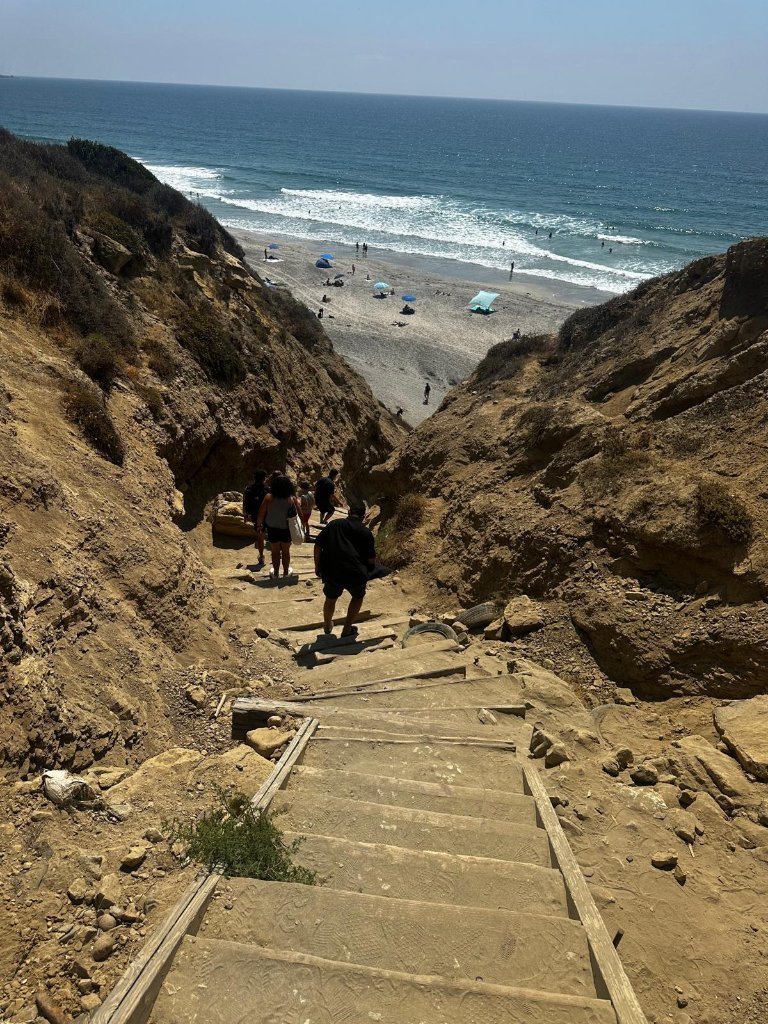
Wear real shoes, not flip-flops, and carry them if you want to be barefoot on the sand. UC San Diego warns that this trail is subject to unpredictable erosion and should not be used during or after rain, when steps turn to mud and washouts. If you cannot manage a steep hill, the paved access road at the south end of the beach near La Jolla Farms is gentler, but it is a considerably longer walk to the clothing-optional end.
Safety: Respect the Cliffs and the Water
- Stay away from the cliff walls. The sandstone is unstable and slides can happen without warning. San Diego Lifeguards and UCSD both say to stay well clear of overhangs. Sit near canyon openings, not directly beneath the bluffs.
- Check the tide. Walking along the sand from neighboring beaches is only possible at low tide. High tide can trap you against the cliffs.
- Respect the surf. There are no flags or designated swim zones, and riptides are common, especially in winter. Swim within sight of a lifeguard. The surf zone just south of the access road tends to be safer.
- Bring everything. There are no restrooms or showers on the beach. Pack water, sunscreen, and a trash bag, and carry out everything you bring.
- Lifeguards are on duty from roughly 9 AM to dusk year-round. If none are present, dial 911.
What to Expect on the Sand
Black’s Beach is about two miles long, wide at low tide and uncrowded compared with most Southern California beaches, simply because of the hike. The mood is relaxed and local: surfers, long-time naturists, couples and groups of friends. The northern end is also popular with the LGBTQ+ community. Photography of other people is not appropriate, and the usual naturist etiquette applies: bring a towel to sit on, keep to yourself, and be respectful.
Black’s is also one of San Diego’s best surf breaks, thanks to a submarine canyon that funnels swells directly onto the beach. That is great for surfers and a good reason for non-experts to stay in the shallows.
When to Go
Late summer and early fall are the sweet spot, with warm sand, calm mornings and clear skies. Spring can bring “May Gray” and “June Gloom” marine layer. Winter swells are powerful and the trail is more likely to be wet, so use extra caution. Arrive in the morning for the best light, parking and the easiest climb back.
Flying in? San Diego International (SAN) is a 25-minute drive from the Gliderport trailhead. Search and compare fares on Kayak. Disclosure: affiliate link – if you book through it, we may earn a commission at no extra cost to you.
Where to Stay Near Black’s Beach
La Jolla and the Torrey Pines area put you minutes from the Gliderport, with options from beachfront resorts to simple motels along the coast. Use the map below, centered on the Torrey Pines Gliderport, to compare places to stay nearby:
Disclosure: this map contains affiliate booking links. If you book through it, we may earn a commission at no extra cost to you.
Leave a Reply