
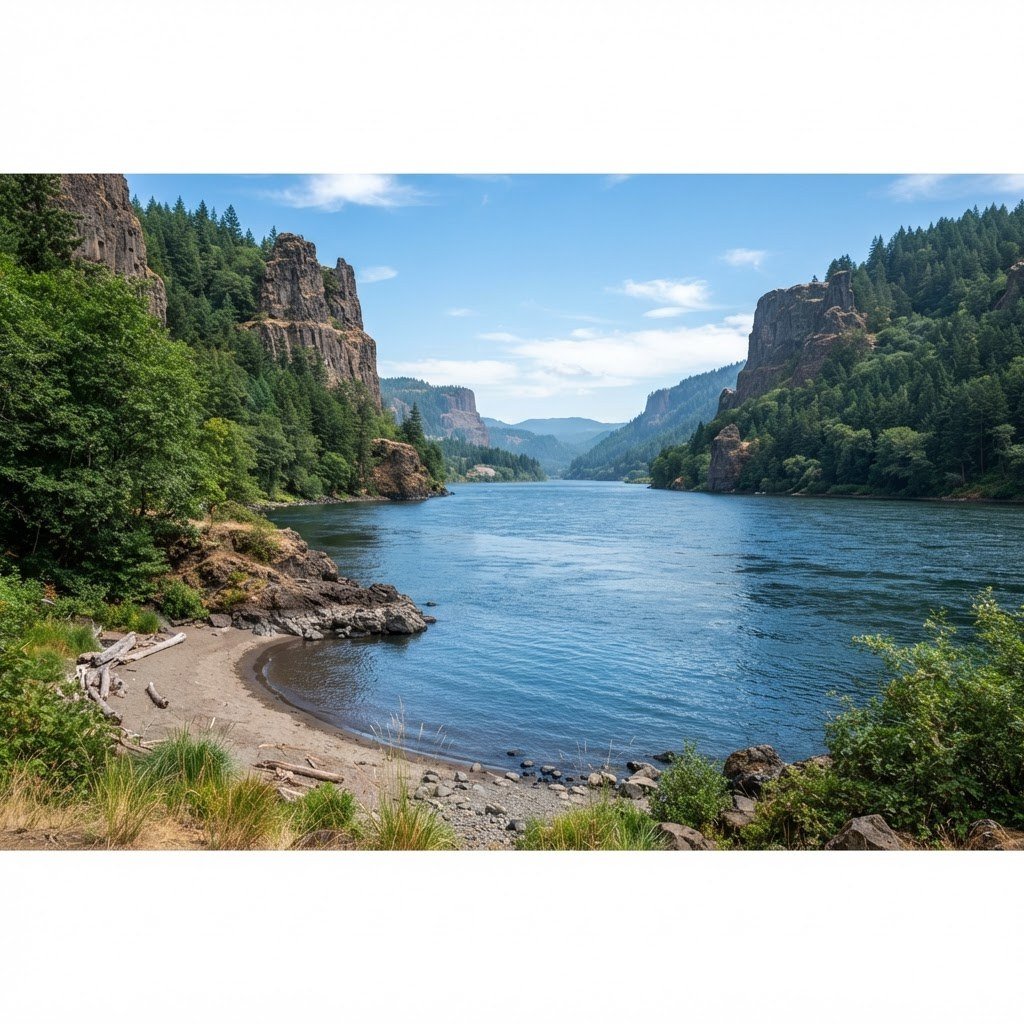
If any US state has figured out legal public naturism, it’s Oregon. The Beaver State is the only place in America where a state park agency formally designated a clothing-optional beach by administrative rule – and then did it again at a wildlife-area beach. Add a state constitution that protects naked expression, and Oregon stands as the country’s most legally secure naturist destination.
Rooster Rock State Park: The National Pioneer
East of Portland in the Columbia River Gorge, Rooster Rock State Park holds a unique place in American naturist history: in 1971 its clothing-optional beach became the first in the nation established at a state park through an official administrative rule – Oregon Administrative Rule 736-010-0065 – rather than by informal tolerance. The naturist zone occupies the beach east of the main day-use area, screened behind a natural rock outcrop, and Oregon Parks and Recreation has reaffirmed the boundaries through public review over the decades. The setting is spectacular Gorge country: basalt walls, river current, and strong summer winds.
Collins Beach: The River Island Classic
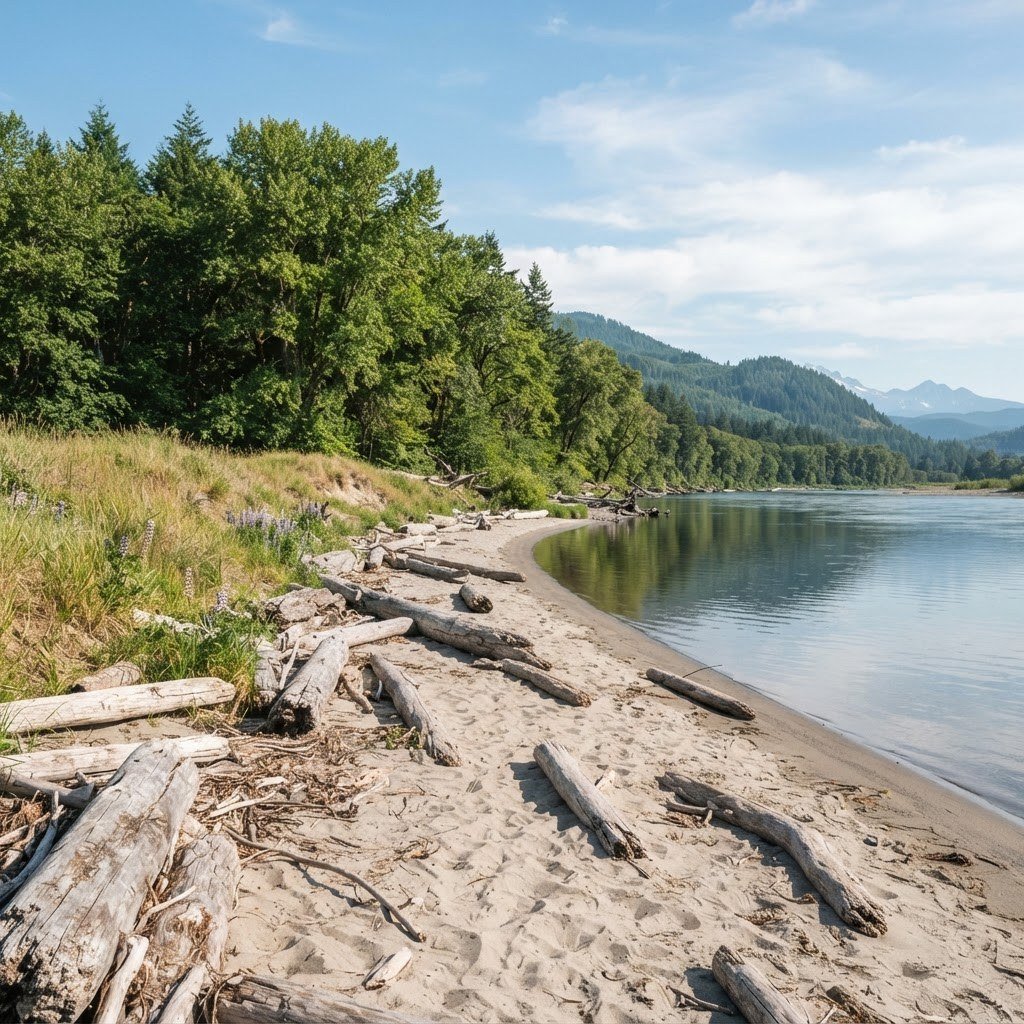
On Sauvie Island, twenty miles from downtown Portland, Collins Beach is the second officially designated clothing-optional shoreline – run under Oregon Department of Fish and Wildlife rules (OAR 635-008) along roughly a mile of sandy Columbia River frontage. You’ll need the Sauvie Island parking permit ($10/day at island stores or online) – it’s a wildlife area first, and the beach sits between the clothing-required beach to the south and the clothing-optional stretch marked by signs.
The Constitutional Backstop
Oregon’s protections go beyond designation. Under Article I, Section 8 of the state constitution – as interpreted in State v. Henry – simple non-sexual nudity is protected expression, and indecent exposure requires lewd intent. That’s why Oregon cities regulate urban nudity with local ordinances while the rest of the state’s vast public lands lean in naturists’ favor; our explainer on nudity on BLM land ranks Oregon among the safest states for dispersed nude camping.
Practical Guide
- Getting there: Rooster Rock is off I-84 Exit 25, 45 minutes from Portland; Collins Beach is via the Sauvie Island bridge from US-30, 30-40 minutes from the city. Neither is transit-easy – rent or borrow a car.
- Season: Peak June-September. The Columbia is swimmable but cool; Rooster Rock sits in the Gorge’s wind tunnel, so mornings are calmest.
- Etiquette: Both beaches follow standard naturist norms – sit on a towel, no gawking, no photography without consent, and stay within the signed zones (at Collins, that’s the area posted clothing-optional; at Rooster Rock, the area past the outcrop).
- Crowds: Collins is the more social, music-and-kites scene; Rooster Rock is quieter and more mixed-crowd.
Oregon is also home to the clothing-optional regional burner gathering SOAK each spring – proof the state’s tolerance spans beach, land, and festival culture alike.
Flying in? Compare flights on Kayak to plan the trip. Disclosure: affiliate link – we may earn a commission at no extra cost to you.
Where to Stay
Find accommodation near the naturist zone on the map below:
Disclosure: this map contains affiliate booking links. If you book through it, we may earn a commission at no extra cost to you.
Leave a Reply