

Hawaii sits in the same legal territory as much of the tropical world: nudity is technically illegal on state beaches, but one cove on Maui has spent fifty years proving that culture can outrank statute. Little Beach is the most famous clothing-optional beach in the Pacific – and the most fragile.
Little Beach, Makena
Tucked behind the cinder cone of Pu’u Ola’i at Makena State Park on Maui’s south shore, Little Beach is a small golden crescent reached by a short scramble over the cone from Big Beach. Since the early 1970s it has run clothing-optional as a matter of deep community custom – a place where locals, hippies, and visitors coexisted on a simple social contract.
The legal status is honestly ambiguous: Hawaii Revised Statutes 712-1217 makes open indecent exposure a violation, and state park rules apply – so the tradition lives on tolerance, not designation. Enforcement waves have come and gone; in January 2021 the state closed the beach entirely after unpermitted gatherings, reopening it under tighter patrol. The community response was to organize: the Friends of Little Beach runs stewardship cleanups and a self-policing ethos explicitly designed to protect the tradition by keeping behavior beyond reproach.
Sunday afternoons are the signature event: the drum circle at sunset, with fire-spinning and poi – though fire restrictions have tightened, and the park closes at dark. The beach has no facilities; pack out everything.
Kehena Beach, Big Island
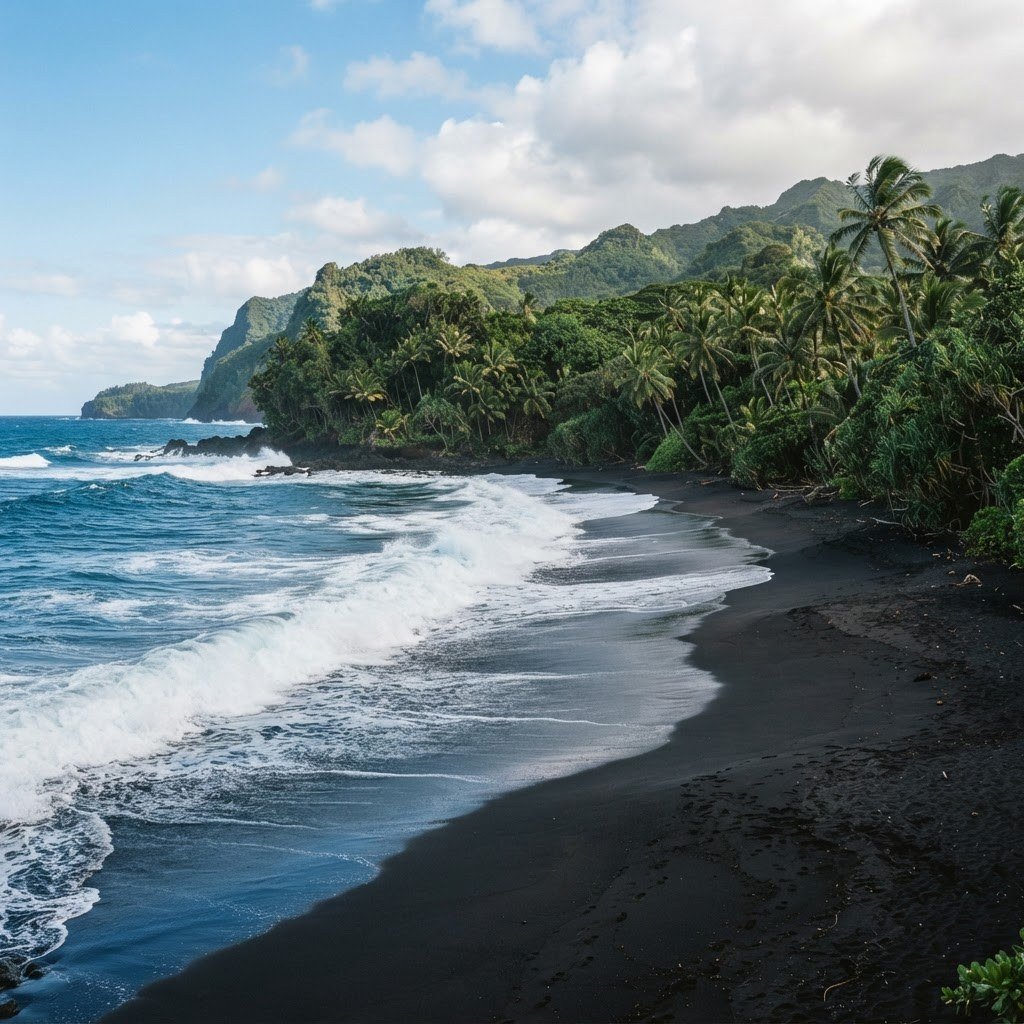
In the Puna district south of Hilo, Kehena is a black-sand cove under a wall of jungle – wilder, more bohemian, and similarly clothing-optional by custom. Dolphins pass close to shore, the shorebreak is strong (swim with real caution), and the crowd is a friendly mix that includes long-time resident naturists.
Cultural Context and Warnings
- Respect sacred sites: Hawaiian beaches and mountains carry deep cultural meaning. Don’t disrobe at, near, or on heiau sites or places of significance – the naturist tradition at Little Beach survived precisely because the community polices that line hard.
- Photography is a hard no: Both beaches are extremely sensitive about cameras; assume the rule is no photos, ever.
- Enforcement is real but wave-based: Citations for nudity on other Hawaiian beaches do happen. If you want zero legal risk, choose the West Coast’s designated options – Oregon’s official beaches or California’s coastline – and treat Hawaii’s spots as what they are: tolerated treasures that depend on your behavior.
Practical Guide
- Getting there: Makena is 45 minutes from Kahului via Kihei; park at the Makena lot and walk over the cone. Kehena is a 45-minute drive south of Hilo on Highway 137 (check lava-related road status in Puna).
- Season: Year-round; winter brings big south-shore swells (watch the shorebreak at both), summer is calmer.
- Essentials: Reef-safe sunscreen only (it’s state law), water, and nothing you’d be sad to lose to the surf.
Flying in? Compare flights on Kayak to plan the trip. Disclosure: affiliate link – we may earn a commission at no extra cost to you.
Where to Stay
Find accommodation near the naturist zone on the map below:
Disclosure: this map contains affiliate booking links. If you book through it, we may earn a commission at no extra cost to you.
Leave a Reply