
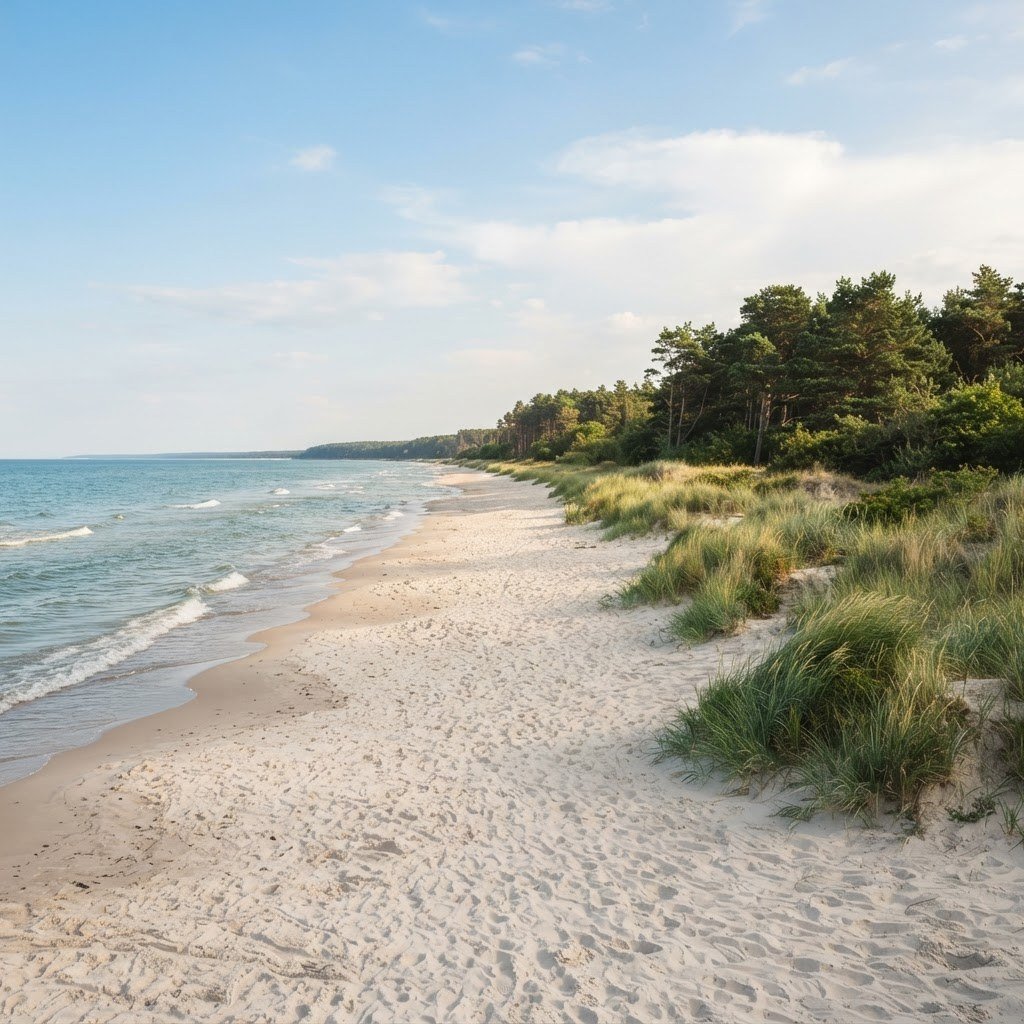
Poland surprises most naturists. This Catholic, socially conservative country has one of Europe’s most developed naturist beach cultures – more than ten recognized clothing-optional stretches along its Baltic coast, a national naturist federation in the INF, and a strict textile-free sauna culture that rivals Germany’s.
The Legal Foundation
Polish law contains no explicit ban on non-sexual public nudity. The relevant statute, Article 140 of the Code of Petty Offenses (nieobyczajny wybryk – “indecent outrage”), punishes acts that deliberately cause public scandal or offense, with fines up to 1,500 złoty or up to 30 days’ detention. A landmark ruling by the Regional Court in Szczecin (case IV Waz 260/08) acquitted beach sunbathers charged under Article 140, establishing that nude sunbathing in a place accepted for it is not an indecent outrage when there is no intent to provoke or harass.
In practice: on designated or customary naturist beaches, Polish police and municipal police do not fine anyone for simple nudity. Fines appear only for sexual acts, voyeurism, or deliberately stripping in a crowded textile family area.
The Baltic Naturist Beach Map
Poland’s naturist beaches are wild, unserviced, and scenic. The most important, from east to west:
- Gdańsk Stogi / Górki Zachodnie – the Tri-City’s traditional spot, at beach entrances 23-21 east of the port. Wide golden sand backed by pine forest; voyeurism is the main nuisance thanks to urban access.
- Chałupy (Hel Peninsula) – the legendary one, immortalized by a 1985 Polish pop hit and the “Miss Naturist” contests of the 1980s. Today it shares its narrow strip with windsurfers, at entrances 10-14 between Chałupy and Kuźnica.
- Dębki – widely considered the jewel of Polish naturism: about 100 m of broad soft sand west of the Piaśnica river mouth (entrances 26-28), family-oriented and respected by local authorities.
- Chłapowo / Rozewie – a secluded cliffside stretch below the Rozewie lighthouse, reached through the Wąwóz Chłapowski gorge (entrances 12-14). Rocky in places, dramatically private.
- Łeba – an official naturist beach co-created with the national naturist federation beside the shifting dunes of Słowiński National Park, with signage marking the section.
- Rowy – a wild stretch east of the port breakwater, bordering the national park buffer zone.
- Międzyzdroje / Lubiewo – a famous naturist tradition dating to the 1970s, 3 km east of the town pier near Wolin National Park.
- Piaski (Vistula Spit) – the remote “end of Poland” near the Kaliningrad border; pristine dunes, almost nobody.
- Grzybowo – an officially signposted “Plaża Naturystów” (naturist beach) near Kołobrzeg, around coastal kilometer 341, with municipal support and sheltered shallow water.
- Świnoujście – the western edge seamlessly connects to Germany’s FKK beach culture across the border at Ahlbeck.
One myth to kill: Sopot has no naturist beach. The resort town’s entire coast is urban and textile; the nearest options are Stogi to the south or Mechelinki to the north.
Sauna Poland: The Textile-Free Boom
The real surprise for visitors is Poland’s saunarium culture. Proper Polish saunas are strictly textile-free zones (strefa beztekstylna) – synthetic swimwear is banned outright for hygiene reasons, and bathers enter naked wrapped in a cotton towel. The Polish Sauna Society’s “Poprawny Saunowicz” campaign has made this etiquette mainstream. Flagship facilities include Termy Rzymskie in Czeladż, whose Colosseum is certified by Guinness World Records as the largest sauna arena on Earth, and the vast textile-free Valhalla saunaria at Suntago Water World near Warsaw.
Community and Culture
The Federacja Naturystów Polskich (FNP), founded in 2008, is Poland’s INF-affiliated national federation and co-established the official Łeba beach. Polish naturism is strongly family-oriented (naturyzm rodzinny) – multi-generational families are the norm, not the exception. The main friction point is not religion but tekstylni – clothed beachgoers wandering into naturist zones in the July-August peak. Poles are also devoted to windbreak screens (parawany), which on naturist beaches double as privacy screens against the brisk Baltic wind.
Practical Know-Before-You-Go
- Season: late June to late August, peaking July 15 – August 15. Air 22-30°C; water a brisk 17-20°C (63-68°F).
- Getting there: Pendolino express trains reach Gdańsk from Warsaw in 2.5 hours; Kołobrzeg in 4.5; Szczecin/Świnoujście in about 5.5. Regional POLREGIO trains run to the Hel Peninsula (Chałupy stop); local buses connect Władysławowo to Dębki.
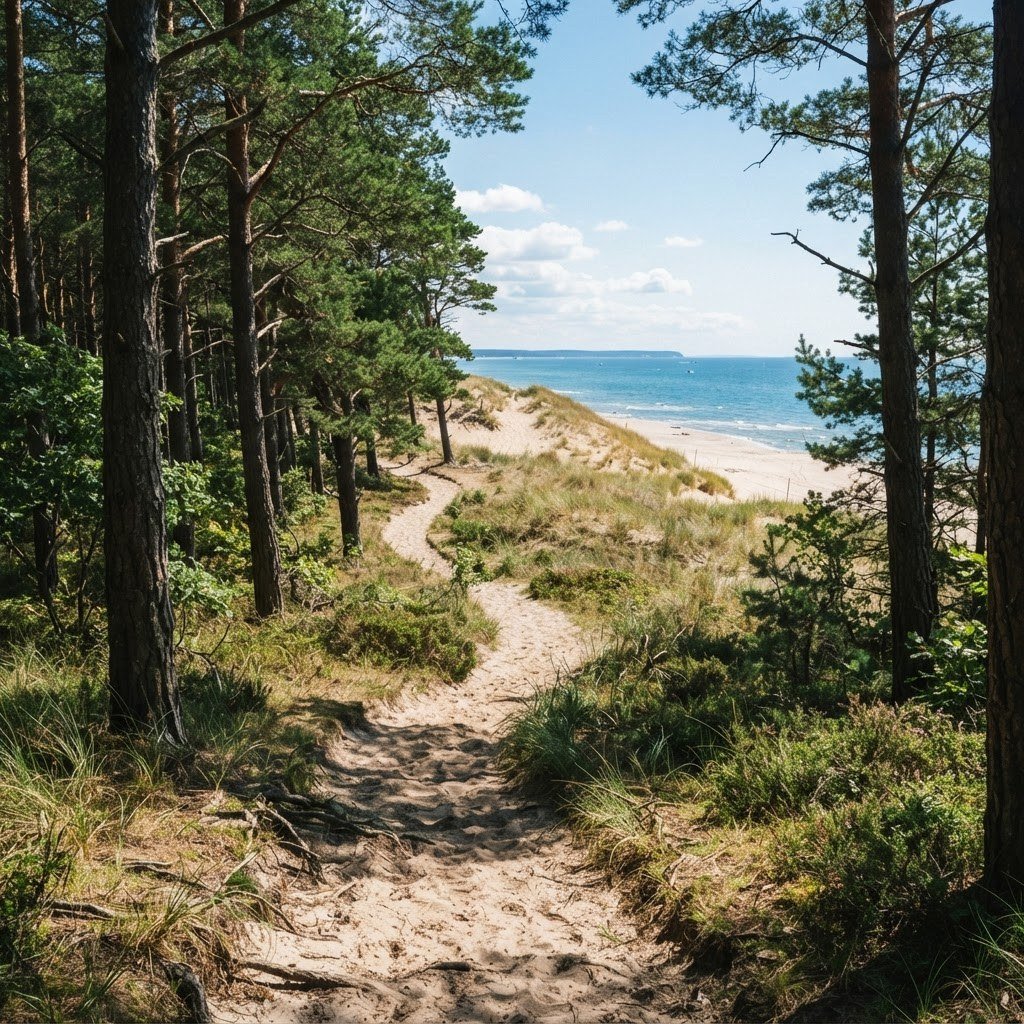
- Pack for a wild beach: no sunbeds, no lifeguards, no bars on the naturist stretches. Bring a windbreak and mallet, umbrella, water, and snacks – kiosks sit 500 m to 1 km back at the textile entrances.
Poland’s Baltic coast sits at the eastern edge of Europe’s naturist heartland – continue north and west and you reach the Nordic right-to-roam tradition.
Compare Flights
Flight prices to your destination change constantly. Compare current fares and find the best deal:
Affiliate link: we may earn a commission at no cost to you.
Where to Stay
Find accommodation near the naturist zone below:
Affiliate disclosure: this map and its booking options contain affiliate links; we may earn a commission at no extra cost to you.
Affiliate & Image Disclosure: This article contains affiliate links (marked as such), which may earn us a commission at no extra cost to you. All images are AI-generated for illustrative purposes and do not depict real people or exact locations.
Leave a Reply