
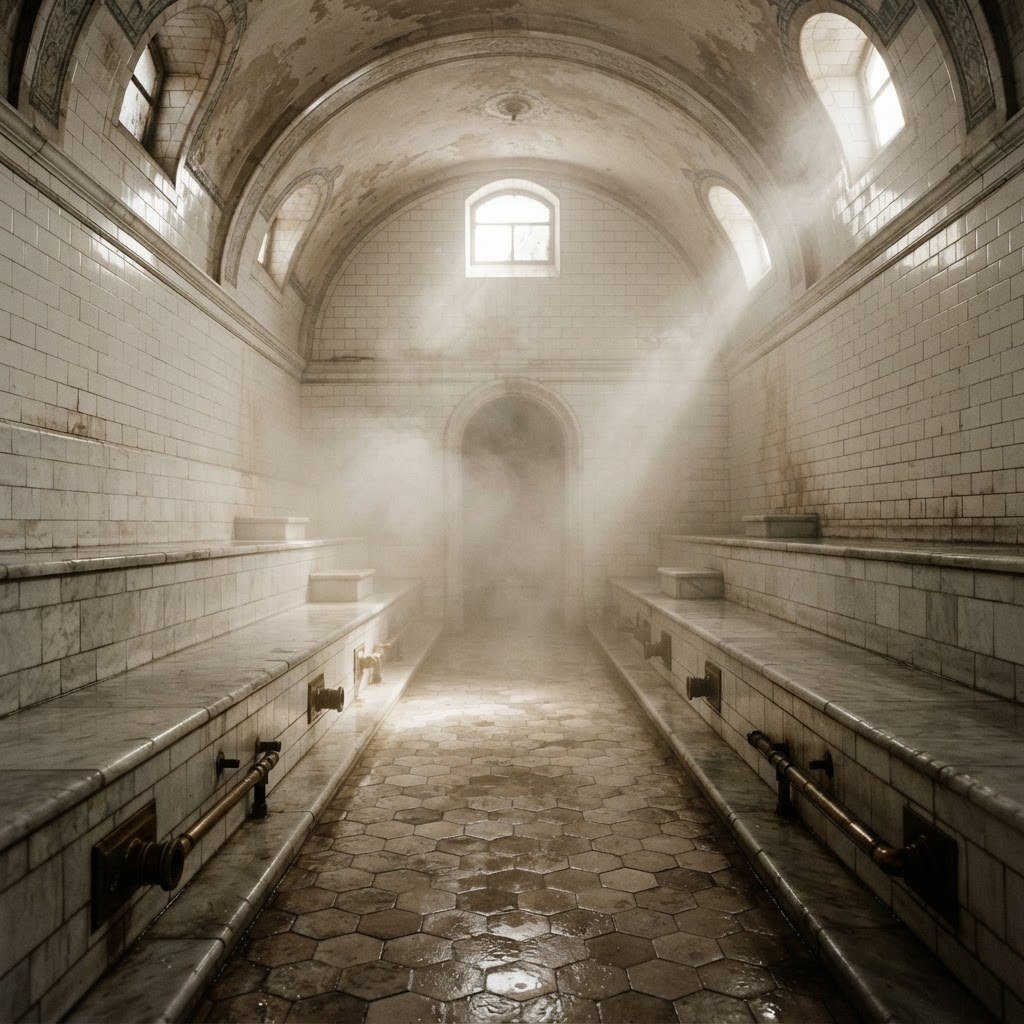
Mexico owns one of the Western Hemisphere’s oldest bathing cultures, built on two distinct traditions: the urban baños públicos, gas-fired steam bathhouses that served working-class neighborhoods for two centuries, and the temazcal, the pre-Hispanic sweat lodge that predates the Spanish by a millennium. Both are traditionally practiced nude in single-sex or private settings, and both are legal: Mexican federal law criminalizes only exhibitionism with sexual intent, not simple nudity, and inside a bathhouse’s single-sex steam chambers full nudity is standard, accepted and culturally protected. This guide, the promised companion to our Asian spa census, covers both traditions state by state.
Part One: The Baños Públicos, State by State
The first commercial steam bath in Mexico City opened in 1799; by the mid-twentieth century the capital alone had more than 250 baños de vapor, essential infrastructure for the vecindades that lacked plumbing. Fewer than a few dozen survive nationwide, done in by home water heaters, gas costs, gentrification and the pandemic. What remains is living heritage, and a genuine bathhouse pilgrimage is still possible.
The etiquette: the vapor general is a single-sex tiled steam chamber where full nudity is the norm; a cotton sheet (sábana) is worn draped between locker and steam room, rubber sandals (chanclas) are mandatory, and the signature service is the fricción – a vigorous agave-fiber scrub administered by a professional bañero. Couples book private suites; there is no co-ed public steam in the tradition.
Ciudad de México
Baños Señorial (Isabel la Católica 92, Centro Histórico) is the flagship: a mid-century multi-floor institution with single-sex vapor general, Turkish steam, private cabins, fricción massages, a barber and a shoe shine, 100 to 180 pesos. Baños Colonial (San Ángel), Baños Caribe (Algarín, from 80 pesos), Baños Estadio (Coapa) and the neighborhood baths of Gustavo A. Madero and Iztapalapa (Río Blanco, Bretaña, Moctezuma) complete the capital’s list. Notable losses: Baños San Juan has been demolished, and Baños Beatriz and the Merced baths are gone with the market’s redevelopment.
Puebla
Puebla preserves one of the country’s healthiest traditions. Baños Papaqui has operated for nearly six decades with Russian dry vapor, Turkish steam, couple’s packages and cold beer served to your cabin; Baños Las Brisas (Cuautlancingo) runs private steam suites. The historic Baños Tres Marías is closed.
Jalisco
Baños Guadalajara (Federalismo Sur, Centro) is the landmark, with single-sex vapor general, private steam rooms and plunge pools; Baños Alcalde and El Roble serve the central districts.
Chihuahua, Oaxaca and Veracruz
Baños Roma in Ciudad Juárez has run for over sixty years – a genuine border institution. Baños La Fuente in Oaxaca City (20 de Noviembre) steams its chambers with eucalyptus and pericón and offers post-partum treatments. Baños Museo Marino in Xalapa, 81 years old, faced closure in 2025 and was saved by community support – a story playing out across the country.
The Other States
Hidalgo: Baños Guerrero in Pachuca has served the old silver-mining districts since the 1930s. Michoacán: Baños Villalongín in Morelia is nearly a century old with a spring-fed pool. Nuevo León: Monterrey’s Baños Roma and Colón persist under water restrictions. Baja California: Tijuana’s Baños San José, Vica and Elba serve the border city. Querétaro: Baños Alameda. Estado de México: Toluca’s central baths face periodic boiler inspections. Guanajuato: León’s iconic Baños Lucita is gone, and San Miguel de Allende’s bathing is now the swimsuit-mandatory thermal caves of La Gruta and Escondido Place.
Part Two: The Temazcal, State by State
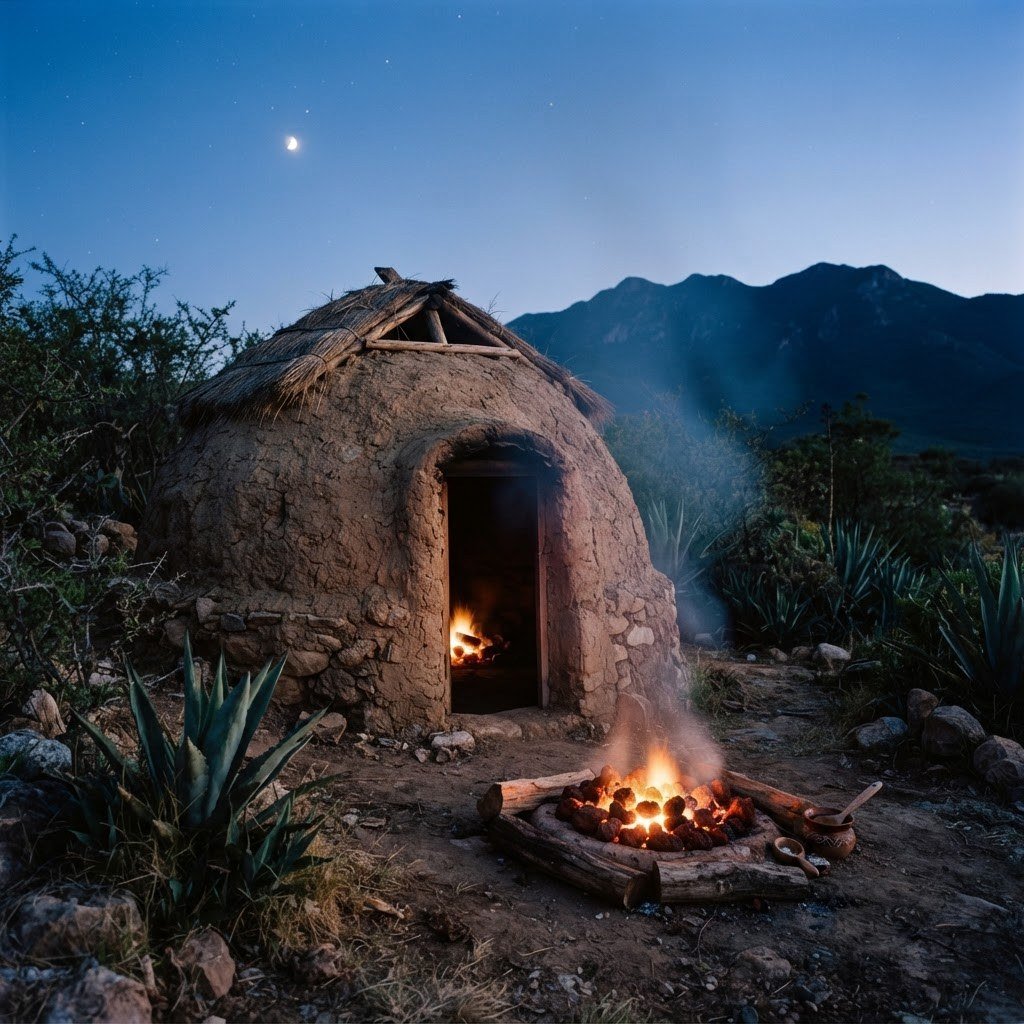
The temazcal is not a spa service but a ritual: the adobe dome is the womb of Mother Earth, the volcanic stones are grandmother spirits, and the ceremony passes through four doors of steam, herb bundles, drumming and song. The evidence for its original nudity is unambiguous – the Codex Magliabechiano shows bathers nude in the dome, and Sahagún’s Florentine Codex recorded that bathers entered “naked as they were born,” to the missionaries’ scandal. Colonial decrees demolished the public temazcales, and the tradition survived in rural indigenous highlands before its modern revival.
The clothing reality today: in mixed public ceremonies – which is to say most commercial ones – swimwear or a cotton wrap is standard. In private bookings, nearly any traditional temazcalero will honor a clothing-optional session if asked respectfully in advance; always bring a towel to sit on. And in one place, nudity needs no arrangement at all: Zipolite, Mexico’s official nude beach (see our dedicated guide), where Hotel Nude Zipolite and Monte Zapoteco run fully clothing-optional oceanfront temazcal ceremonies.
Estado de México
Malinalco is the state’s sacred center – its monolithic Cuauhcalli, the Eagle and Jaguar warrior temple carved from living rock, echoes the initiation cave. Ollinyotl Centro Holístico runs public weekend temazcals (swimwear) and private clothing-optional ceremonies; El Copalli is the traditional local option, and Valle de Bravo’s Hotel Avándaro offers luxury pine-forest ceremonies.
Morelos
Tepoztlán is Mexico’s temazcal capital. Hostal de la Luz is the internationally known luxury anchor; Posada del Tepozteco the boutique option; Ollin Calli the authentic budget choice from 350 pesos; and Cuernavaca’s Hacienda de Cortés holds ceremonies in a 16th-century sugar mill.
Ciudad de México, Puebla and Tlaxcala
In the capital, the southern boroughs keep the tradition alive: Teoapantli in Xochimilco – one of Latin America’s largest temazcals, a Quetzalcóatl serpent dome reached by trajinera through the canals – plus Calpulli Tecalco and the highland lodges of Ajusco. Puebla’s Cholula anchors the state (Temazcal Calli Coatlicue near the Great Pyramid), with Cuetzalan’s Sierra Norte preserving Nahua home temazcals. Tiny Tlaxcala has the country’s densest concentration of authentic backyard family lodges, including Hotel Xiadani – among the most nudity-friendly, matching traditional custom.
Oaxaca and Veracruz
Oaxaca City’s CEPAVI temazcal is run by Zapotec curanderas with clay scrubs and sobada massage, with private nude sessions available. The coast – Zipolite above all, plus Mazunte’s Homalá – offers the state’s clothing-optional ceremonies. Veracruz holds two distinct traditions: the Totonac kni steam houses of Papantla near El Tajín, and the brujo country of Catemaco, where Nanciyaga runs jungle temazcals with volcanic mud and lake plunges.
The Yucatán Peninsula
The Maya sweat lodge – zumpul-ché – remains tied to cenote ritual. The luxury standard is Chablé Yucatán near Mérida, with a private cenote and an authentic Maya J-Men leading ceremonies, clothing-optional for private bookings. Yaxkin Spa at Chichén Itzá and the community project at Yaxunah are the accessible options. In Quintana Roo, Tulum’s Yäan Healing Sanctuary holds full-moon temazcals (private sessions negotiable) and Bacalar’s lagoonfront Akalki serves the south.
The Pacific and Western States
Jalisco: Monte Coxala at Lake Chapala, thermal-spring-fed Neo-Mayan architecture. Nayarit: Haramara Retreat above San Pancho, with private clothing-optional sessions, and Sayulita’s bohemian beach ceremonies. Michoacán: the P’urhépecha k’utzi tradition at Hacienda Temazkalli on Lake Pátzcuaro. Guerrero: the partera midwife lodges of Tixtla and Chilapa, the tradition’s deepest root. Chiapas: San Cristóbal’s highland lodges and Palenque’s Lacandon-inspired rainforest baths. Querétaro: a temazcal facing the Peña de Bernal monolith. Guanajuato and Durango: San Miguel’s garden sanctuaries and the Sierra Madre eco-parks round out the map.
Practical Notes
A guide is not optional: the temazcalero manages the stones, the heat and the chants. Enter on your knees through the low doorway – the mouth of the earth – greet the threshold, and move clockwise. Contraindications are real: skip either tradition with cardiovascular conditions, uncontrolled blood pressure or pregnancy (except specialized prenatal care). At the baños, arrive by daylight or rideshare in working-class districts, bring your own padlock, chanclas and towel, and tip the bañeros 20 to 50 pesos. The five-region pilgrimage: Mexico City for the urban baths, Oaxaca for the coast and valley, Puebla and Tlaxcala for the highlands, Morelos for the temazcal capital, and Yucatán for the Maya tradition.
Where to Stay
Disclosure: this map contains affiliate booking links. If you book through it, we may earn a commission at no extra cost to you.
Leave a Reply