
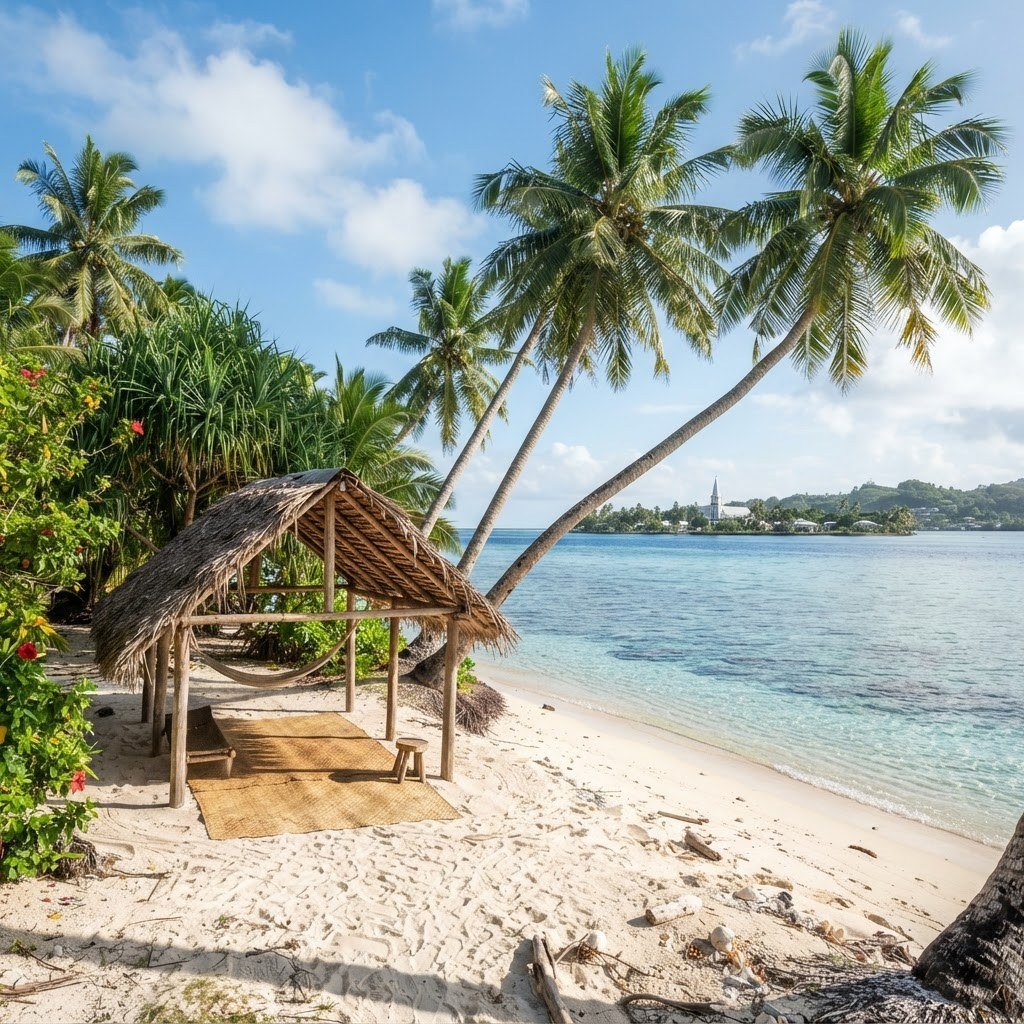
Independent Polynesia is the most conservative corner of the Pacific, and it is not close. Where French Polynesia carries the legacy of French beach culture, the independent nations – Samoa, Tonga, Tuvalu, Kiribati, the Cook Islands and Niue – fused 19th-century missionary Christianity with centuries-old customary governance to produce some of the strictest public modesty standards on earth. The honest verdict up front: there are zero official or tolerated naturist venues anywhere in these jurisdictions, and the cultural machinery that enforces that is far more powerful than the police.
Samoa: The Fono System
Samoa’s Crimes Act 2013 criminalizes indecent exposure and public indecency, including topless sunbathing for women on every beach in the country. But the statute is the lesser force: the Village Fono Act 1990 gives each village’s council of matai chiefs legal authority over village lands, coastal waters, and behavior – including the power to impose customary sanctions of real weight: monetary fines, livestock levies of pigs, fine mats, or outright banishment. Beach etiquette is exacting: swimwear is acceptable only on the immediate sand, and walking through a village in a swimsuit – or as a shirtless man – causes significant offense; a lava-lava over swimwear is the norm. Sunday observance is law-like: evening prayer curfews announced by gongs pause all activity, and in non-resort areas Sunday swimming is considered taboo. Even Samoa’s uninhabited offshore islets – Namu’a, the Aleipata group – are customary village property, watched by the same boat captains who would take you there.
Tonga: The Shirtless Law
Tonga is one of the few countries on earth where the law requires men, as well as women, to keep their tops on in public. Under the Criminal Offences Act, appearing shirtless in a town or village draws police warnings and fines. The constitution itself enforces the strictest Sunday Sabbath in the Pacific – Clause 6 bans trade, labor, and public beach swimming on the Sabbath. This is a devoutly Methodist and Mormon kingdom where modesty (faka’apa’apa) is a pillar of the culture; there is no naturist presence and no tolerance for one.
Tuvalu and Kiribati: Small Nations, Strict Elders
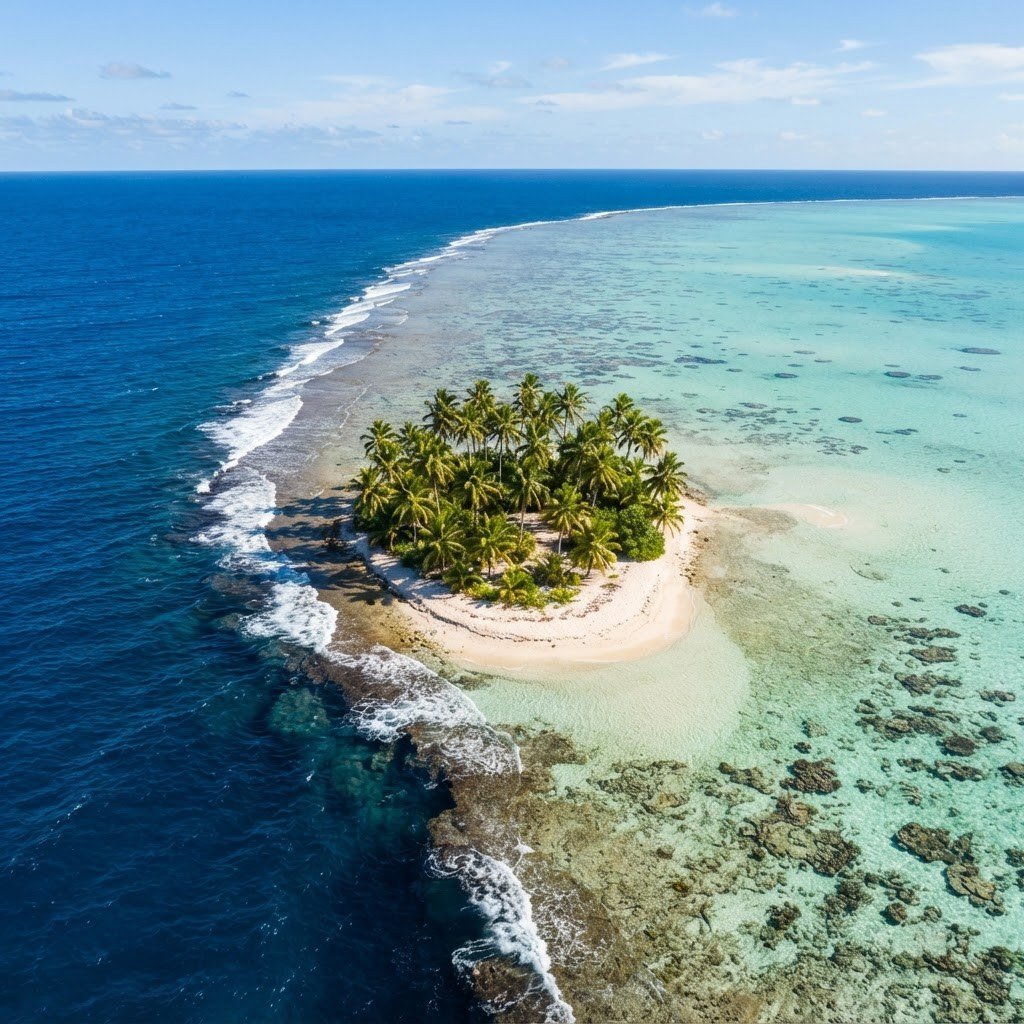
Tuvalu’s penal code penalizes public indecency, and enforcement begins far above the police: the Falekaupule councils of elders govern daily life under the Ekalesia Kelisiano Tuvalu church. The uninhabited conservation motus of Funafuti Atoll – Tefala, Fualopa, Tepuka Vili Vili – look like the perfect naturist fantasy, but access runs through local boat operators who uphold island modesty norms themselves, and nudity there is reported to the elders. Kiribati is governed by Te Katei ni Kiribati and its Unimwane elder councils; local women traditionally swim in skirts and t-shirts. Even Kiritimati – the world’s largest coral atoll, with vast empty eastern shores and virtually no police presence – cannot be reached except through local bonefishing guides who are community members first and hosts second. Remoteness here does not equal privacy; it equals a small audience of exactly the people you must not offend.
Cook Islands and Niue: The Missionary Contrast
The Cook Islands make the regional contrast explicit. The Tourism Corporation states it plainly: nude or topless sunbathing will cause offense and is not permitted. The Aitutaki lagoon’s postcard motus – One Foot Island, Maina, Akaiami – are private customary family lands served by daily water taxis and tour boats, and are emphatically not clothing-optional. Niue’s spectacular sea chasms – Avaiki, Matapa, Limu Pools – carry official signage requiring modest dress and immediate cover-ups out of the water, with village elders prohibiting Sunday-morning swimming during church services. The line these countries draw is the legacy of the London Missionary Society’s Calvinism – and it has not moved.
The Deserted-Island Question, Answered Honestly
Can you charter a boat to an uninhabited Polynesian motu and go nude in the legal grey? The legal theory is one thing; Polynesian land tenure is another. There is no such thing as unowned land here: every islet, sandbar and reef flat belongs to a family lineage, a village council, a matai, or a protected-area authority, and arriving without customary permission is trespass. You also cannot reach these places without local boat captains, who are community members bound by the very taboos you would be breaking. The one honest formula: a bareboat yacht charter – no local crew aboard – anchored off a genuinely deserted sandbar with no boats or settlements in sight is a “don’t ask, don’t tell, don’t be seen” scenario. It is not a legal grey zone; it is illegal but unobserved, and being seen changes everything.
Practical Notes and the Verdict
- Season: May to October is the dry season across independent Polynesia.
- Getting there: Apia (Samoa) and Nuku’alofa (Tonga) are the regional gateways; Tuvalu and Kiribati are reached via Fiji.
The verdict for naturists: French Polynesia – covered in our Overseas France guide – is the only Polynesian corner where the body is relaxed. Independent Polynesia is the world’s most instructive no, and it deserves to be understood rather than argued with. Continue through the region with our Melanesia guide and the Micronesia guide.
Find a place to stay
Map and flight search via our affiliate partner Stay22 – we may earn a commission on bookings.
Apia (APW) and Nuku’alofa (TBU) are the gateways. Compare fares via Kayak
Leave a Reply