
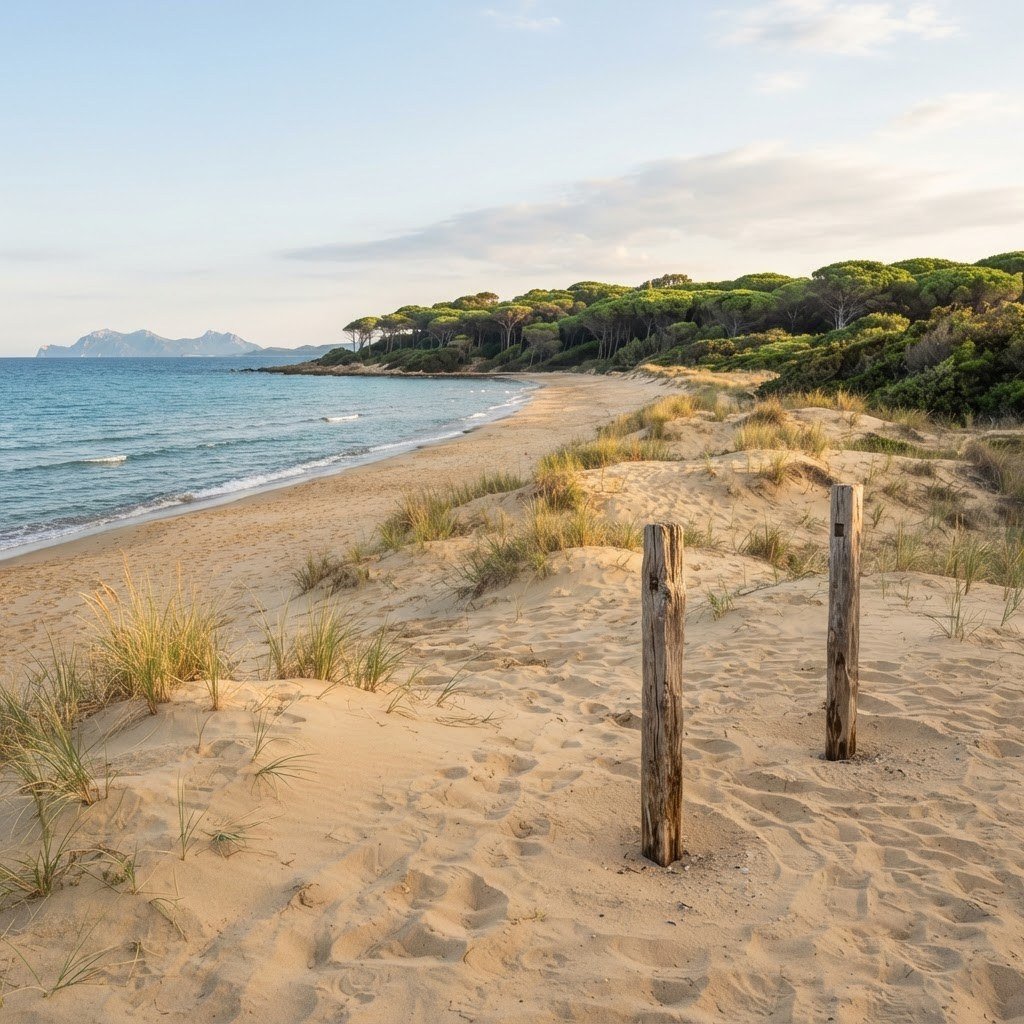
Italy runs its naturism on paperwork. There is no national law that says “nudism is legal” – instead, each of the country’s official naturist beaches exists because a town council passed a specific resolution (delibera comunale) or a region wrote naturist tourism into law. The result is a decree map that is quietly growing, and its oldest and boldest markers are in the north and center: the beach Rome legalized in 2000, the stretch Viareggio designated in 2022, the cove Elba reserves exclusively for naturists. This is the complete guide to that map.
The Legal Frame: Decriminalized, Then Decreed
Two things changed in the 2010s. First, in 2016, Legislative Decree 8/2016 decriminalized acts contrary to public decency (Penal Code Art. 725/726): simple public nudity is now an administrative violation carrying a fine of 5,000 to 10,000 euros (about 3,330 if paid promptly) – and Article 527’s “obscene acts” remains criminal only in places frequented by minors. Second, Italy’s Supreme Court – the Corte di Cassazione – has twice confirmed, in rulings from 2000 and 2019, that simple sunbathing at beaches that are customary or municipally designated naturist zones does not constitute any offense at all. Add the municipal delibera mechanism, and you get Italy’s model: naturism is legal exactly where it has been made legal.
Capocotta: The Pioneer (Rome)
In June 2000, Rome under Mayor Francesco Rutelli passed the delibera that created Italy’s first officially sanctioned municipal naturist beach: 250 meters of dune on Via Litoranea between cancellos 5 and 7, between Ostia and Torvaianica. A quarter-century later, the Oasi Naturista di Capocotta remains the capital’s naturist flagship – equipped with wooden boardwalks, sunbed and umbrella rental, eco-toilets, showers, and a beachfront kiosk at cancello 5. The stretch around the Settimo Cielo chiosco at cancello 6, extending toward Torvaianica, is one of Europe’s great LGBTQ+ naturist destinations – Romans call it the “Cape Cod de noantri.” Getting there is uniquely easy: the Metromare train from Porta San Paolo or Piramide, then the 07 summer express or 061 bus along the Litoranea.
La Lecciona: The 2022 Designation (Versilia)
Tuscany’s flagship arrived on April 22, 2022, when the Municipality of Viareggio passed Delibera 122 in collaboration with the naturist federations and the Migliarino-San Rossore-Massaciuccoli Regional Park: a roughly 500-meter stretch of pristine dune beach between marker posts 13 and 15 at La Lecciona, between Viareggio and Torre del Lago. The beach is deliberately wild and unserviced – no kiosks, no rentals, pack out your garbage – reached on foot or by bicycle through the pine forest along Viale dei Tigli, or by walking 15-20 minutes north along the shore from Marina di Torre del Lago. It is the newest big name on the Italian decree map and already one of its most reliable.
Tuscany’s Other Official Beaches
Further south on the Etruscan coast, the Municipality of San Vincenzo designated the Nido dell’Aquila inside the Rimigliano Natural Park by Delibera 83 of March 24, 2010 – golden dunes, clear municipal signage, and a kiosk set back in the pines rather than on the sand. On Elba, the Municipality of Capoliveri went further than anywhere in Italy: Delibera 84 of May 6, 2015 reserved Acquarilli beach, a dark-pebble cove beneath high cliffs near Lacona, exclusively for naturists. And on the Livorno coast, the city designated the rocky cliff spots of Sassoscritto and Calignaia by resolution in 2017-18. Tuscany is, quietly, Italy’s most decreed region.
Lido di Dante and the Laguna del Mort
In Emilia-Romagna, Ravenna made history in July 2002 when Mayor Mercatali’s ordinance reserved a stretch of wild dune south of Lido di Dante – the Bassona – for naturism, an early application of the region’s Law 16/2006. Because the beach borders the protected Foce del Bevano bird reserve, the municipality renews a seasonal ordinance each year defining the authorized 400-500 meter stretch; behind the dunes, Camping Classe has offered naturist-friendly facilities for decades. And the true Venetian answer to naturism is not Bibione (see below) but the Laguna del Mort, the wild lagoon and dune coast between Eraclea Mare and Jesolo, recognized under Veneto’s Regional Law 7/2014.
Myth-Busts: The Places to Skip
Three names need honest corrections. Bibione: the internet insists it hosts an official naturist beach by “2011 pilot decree” – in reality, Bibione’s landmark 2011 initiative was Italy’s first smoke-free beach pilot, and the municipality has never passed a naturist resolution; the coast is fully commercialized textile. Guvano, the legendary Cinque Terre nude cove, is officially closed: the railway tunnel access was sealed and the cliff path is landslide-hazardous, reachable only by sea. Sassi Neri at Sirolo in the Marche, once tolerated, is now strictly prohibited and actively enforced. Fregene is strictly textile, and the northern lakes (Garda, Como) offer only small informal rocky niches with zero official status.
Practical Notes
- Getting there: Rome (FCO) serves Capocotta via the Metromare train; Pisa (PSA) serves the Tuscan coast; Ravenna and the lagoon need a car.
- Season: May through September; the official zones get busily reliable in July-August, wonderfully empty in June.
- Rule of thumb: the designated stretches are marked – stay between the paline, and dress at the entrances.
Continue the Italian map with our Southern Italy guide, and see the national umbrella guide for the full legal framework.
Rome (FCO) puts Capocotta a train ride away; Pisa (PSA) serves the Tuscan coast. Compare fares on Kayak (affiliate link).

Leave a Reply