
The Caribbean’s Quietest Naturist Island
Cuba is not a naturist country. Let’s be clear about that up front: public nudity is against the law, there are no Cuban naturist clubs, and on every beach where Cubans themselves swim, taking your suit off would end badly. And yet Cuba holds one of the most established clothing-optional destinations in the entire Caribbean, one that Canadians and Europeans have quietly enjoyed for three decades while remaining almost unknown in the United States. The story of how an authoritarian island built a nude beach out of hard-currency pragmatism, and who can actually get to it in 2026, is one of the strangest in nude travel.
Illegal on Paper, Tolerated on the Sand
Under Cuba’s Penal Code (Ley 151/2022, which replaced the old Ley 62/1987), public displays that offend modesty and public order are criminal offenses. There is no Cuban statute legalizing naturism anywhere, and no amount of research will find one – the claims you sometimes see about an “official nude beach law” are simply false. What Cuba practices instead is selective pragmatism. Through the tourism ministry and state hotel groups Gran Caribe and Gaviota, the government tolerates clothing-optional zones on remote, tourist-only offshore cays, where no Cuban families vacation and no Cuban naturist movement needs to be permitted to exist. Mainland beaches – Varadero, Playas del Este, Guardalavaca – are strictly textile and policed.
The history explains the why. After the Soviet collapse, the 1990s “Special Period” pushed Cuba to open isolated cays to foreign hotel operators for hard currency. Italian tour operators (Group Ventaglio was the pioneer) and later Canadian package companies arrived with charter flights full of European naturists, and the state discovered that nude tourists pay the same as textile ones. Tolerance became a quiet revenue line – never written into law, but never written out either.
Cayo Largo del Sur: The Flagship
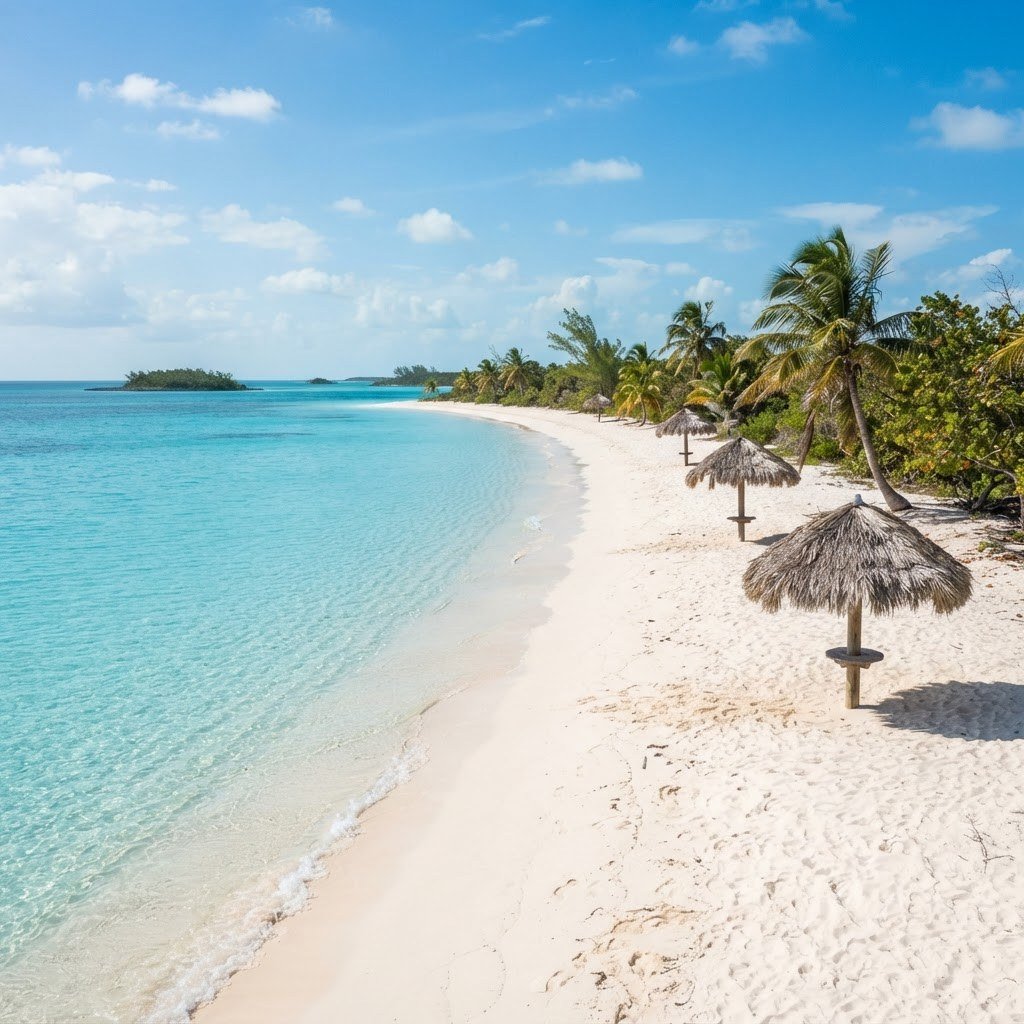
Cayo Largo del Sur, a 25 km island off Cuba’s southern coast with no permanent population – only seasonal hotel and airport workers housed in Pueblo Isla del Sol – is Cuba’s naturist capital. Developed in the 1980s and converted to naturist-friendly tourism in the 1990s, it offers more than 20 km of connected, uncrowded white-sand shoreline where clothing-optional use is openly recognized by resort staff and guards:
- Playa Paraiso – the strongest clothing-optional tradition, especially the eastern stretches toward Punta Mal Tiempo.
- Playa Sirena – the main hub is textile, but the outer ends toward Paraiso are naturist.
- Playa Lindamar – the resort strip features designated “Área Nudista” sections marked with palapas.
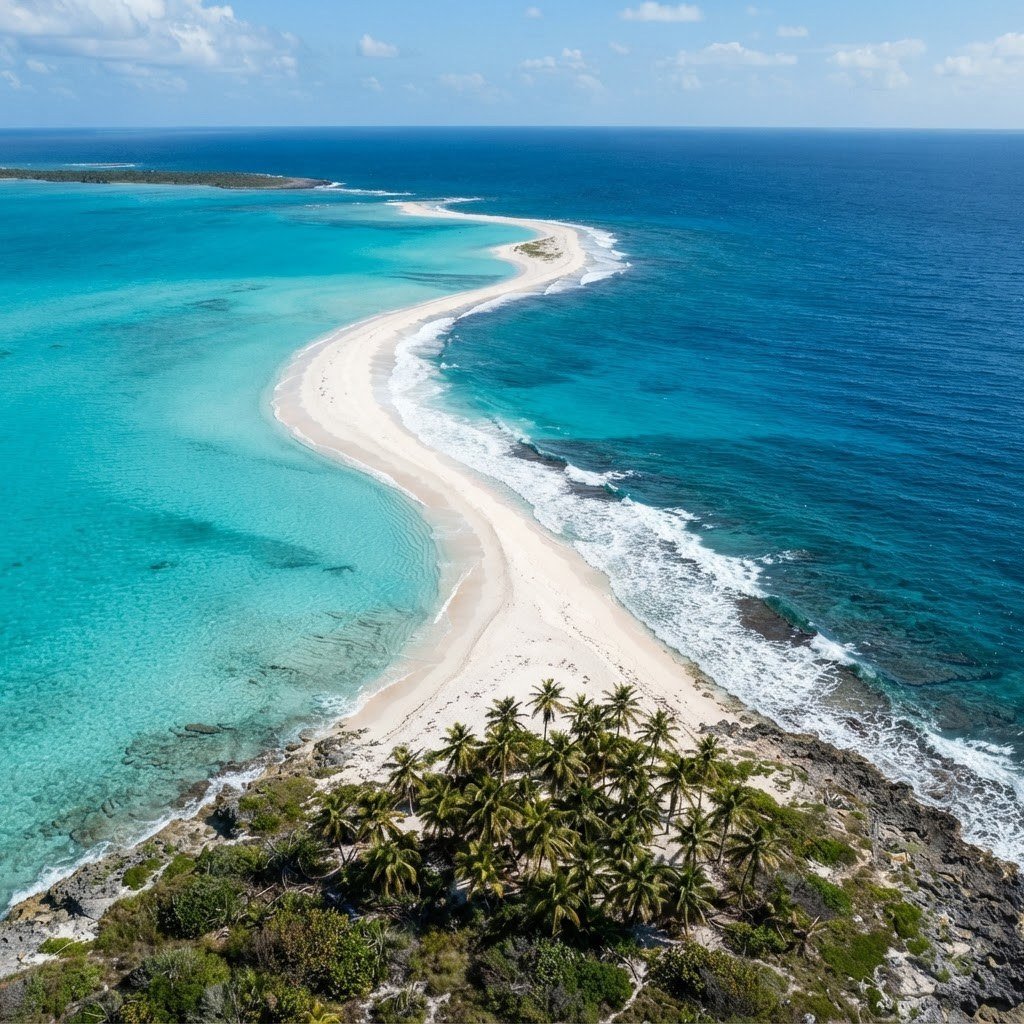
- Punta Mal Tiempo / Los Malgatones – a desolate, beautiful spit of sand that serves as the island’s unpoliced naturist heart.
The entire coastline connects, so long nude beach walks between zones are one of Cayo Largo’s signature experiences. The rule that matters: nudity belongs on the beach. Clothing is mandatory in resort lobbies, restaurants, pools and indoor spaces, and this is enforced.
Since 2022, every hotel on the island has been managed under one roof by Blue Diamond Resorts, the Canadian (Sunwing) operator, under agreement with the state. The current roster: Memories Cayo Largo (the former Sol Cayo Largo, historically THE naturist hotel), Starfish Cayo Largo (former Hotel Pelicano), Grand Memories Cayo Largo with its adults-only Sanctuary section, and the smaller villas (Lindamar, Caprice, Coral/Soledad, Marinera).
The Second Spot: Cayo Santa Maria
Cuba’s other tolerated naturist area is Playa Canón on Cayo Santa María, the virgin stretch connecting the Sol Cayo Santa María and Meliá Buenavista resorts, which maintains its own designated “Área Nudista.” On Cayo Coco and Cayo Guillermo, clothing-optional sunbathing happens only on remote stretches far from hotels (the outer ends of Playa Pilar, for example). Varadero is strictly textile, with tolerance only at the isolated far-eastern tip near Punta Hicacos. Private casas particulares are a legal grey area: nude sunbathing in a fully enclosed private yard attracts no attention, but there is no clothing-optional B&B sector in Cuba.
Can Americans Go?
Here is the part most guides dodge. American tourism to Cuba is statutorily prohibited (the Trade Sanctions Reform and Export Enhancement Act of 2000). Travel is possible under 12 OFAC general-license categories – family visits, journalistic activity, religious activities, and the popular “Support for the Cuban People” category, which requires staying in private casas particulares, eating at private paladares, and avoiding state entities on the State Department’s Cuba Restricted List.
The honest catch: every resort on Cayo Largo and Cayo Santa María is state-owned. For a compliant American traveler, staying at Cuba’s naturist resorts is currently close to impossible – the very hotels that permit nudity are on the list you’re prohibited from paying. Family visits are the main category that genuinely applies to Cuban-American readers. If you’re American and naturism is the goal, the compliant path today runs through other countries – or through waiting, because the rules have changed multiple times in both directions, and may change again.
The Warning Almost Nobody Gives You
If you’re Canadian or European, no Cuban restriction stops you – but a US one does something subtle: any visit to Cuba since January 12, 2021 permanently disqualifies you from the US Visa Waiver Program (ESTA). If you later want to visit or transit the United States, you’ll need to book an embassy interview for a B1/B2 visa. If a US trip is on your horizon, sequence it before Cuba.
Getting There in 2026
Cayo Largo’s Vilo Acuña Airport (CYO) historically received direct Canadian and Italian charters, but fuel shortages and grid instability led Sunwing and Air Transat to suspend direct flights for recent seasons. The working route now: fly to Havana (Canadians have nonstops from Toronto and Montreal; Europeans connect through Madrid, or Milan on Neos, which also serves Cayo Largo seasonally), then take the domestic Aerogaviota ATR hop from Havana or Varadero to Cayo Largo. Cuban domestic schedules are volatile in the current fuel crisis – build buffer days. On the island, the tourist land-train and hotel shuttles connect the beaches.
Practical Survival Notes
Cash is king: US-issued cards never work in Cuba, and even Canadian and European cards fail whenever the grid flickers. Bring clean, un-torn USD or EUR in small bills. Power cuts (apagones) are a daily nationwide reality in 2025-26; resorts lean on generators, but backup is fuel-limited. Internet runs on ETECSA Nauta cards or tourist eSIMs and drops during outages – download a VPN before arrival, since US financial apps and booking platforms block Cuban IP addresses. The season is November to April; hurricane season peaks August-October; and the sea stays bath-warm year-round, 25-29°C. Topless sunbathing is widely accepted on mainstream Cuban resort beaches among Europeans and Canadians; full nudity belongs to the zones above.
Looking for a fully clothing-optional beach town closer to the US mainstream? Our Zipolite nude beach guide covers Mexico’s famous nude beach on the Oaxaca coast.
Book Your Flights
Compare flights to Havana, Varadero, or (from Canada) your nearest Cuban gateway:
Search flights to Cuba on Kayak (affiliate link)
Where to Stay on Cayo Largo
All accommodation on Cayo Largo is resort-based. Compare the current options and availability on the island:
Disclosure: this map contains affiliate booking links. If you book through it, we may earn a commission at no extra cost to you.
Leave a Reply